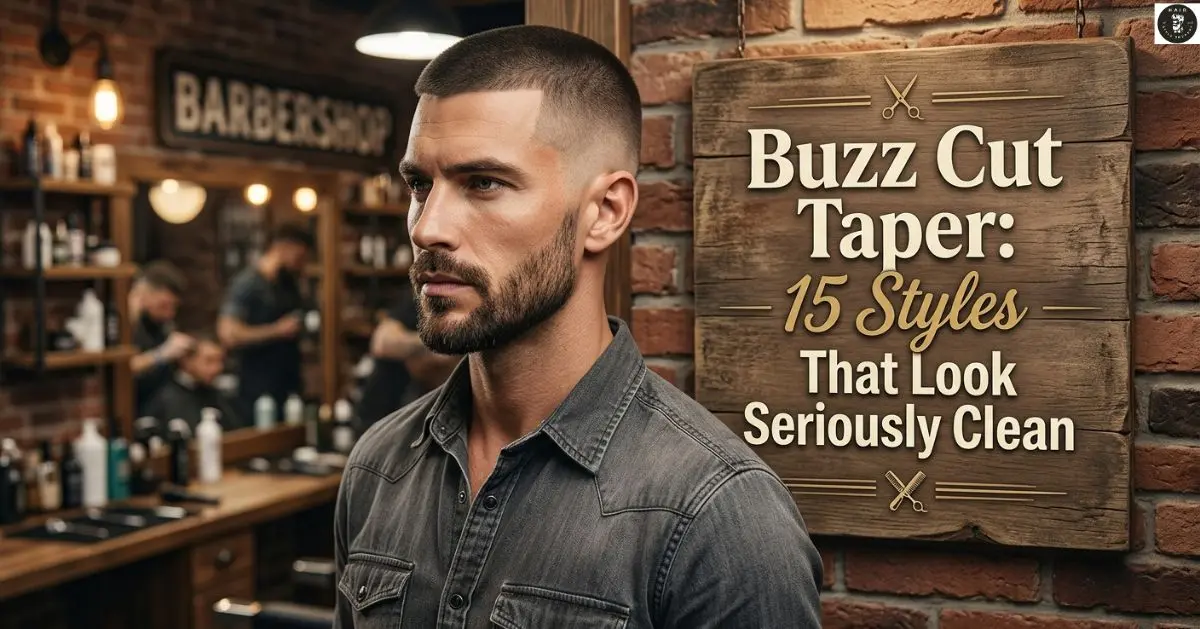
Buzz Cut Taper: 15 Styles That Look Seriously Clean
A buzz cut isn’t really one haircut — it’s a whole language of restraint, spoken in millimeters, guard numbers, and gradients of control. How close you go, and whether that closeness fades gently or stops abruptly, changes the entire impression the cut leaves.
Nowhere is that more obvious than with the buzz cut taper, a version that trades the hard contrast of a full fade for something quieter, more controlled, and honestly a little more forgiving to live with day to day.
If you’ve been eyeing a shorter cut but the idea of a stark, skin-tight fade feels like too much of a statement, the buzz cut taper is worth a serious look.
Below, we’ll break down exactly what separates it from a fade, why that subtlety matters, and 15 different ways to wear it depending on your hair texture, face shape, and how much personality you want the cut to carry.
Also Read: 41 Mid Fade Buzz Cut Styles That Look Sharp in 2026
What Is a Buzz Cut Taper?
A buzz cut taper keeps the top of the head clipped short and uniform, while the hair around the sides and back gradually decreases in length without ever dropping fully to skin.
That last detail is what defines a taper specifically: your natural hairline stays visible the entire way down, rather than disappearing into a hard, bare-scalp line the way it would with a true fade.
Think of it as hair control expressed through gradual change rather than sharp contrast. 👉 Read More: Buzz Cut taper
There’s no single dramatic blend point to point to — instead, the length simply eases downward, guard by guard, until it meets the neckline. The result reads as clean and structured, but with a softness that a full skin fade doesn’t really offer.
Buzz Cut Taper vs Buzz Cut Fade
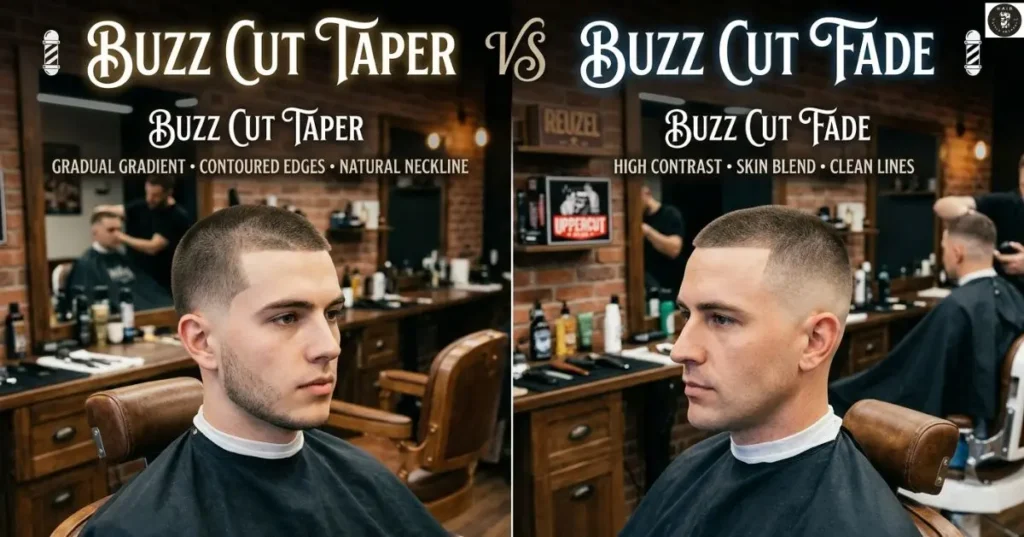
This distinction trips people up constantly, and it’s worth getting right before you sit in the chair.
A fade blends hair down to bare skin at some point along its length, creating high contrast and a sharp visual break between skin and hair.
A taper, on the other hand, never fully exposes the scalp — it simply narrows the length gradually, leaving a thin covering of hair even at its shortest point. 👉 Read More: Buzz Cut Mullet
Practically speaking, that means a buzz cut taper looks softer from a distance, requires slightly less frequent barbershop visits to stay sharp (since there’s no stark line to maintain), and tends to grow out more gracefully without leaving that awkward, patchy regrowth a fade often shows after a couple of weeks.
Why the Buzz Cut Taper Feels Different
There’s something to be said for a haircut built entirely around restraint. A buzz cut taper doesn’t rely on scalp exposure or dramatic gradient blending to make an impression — it communicates precision through subtlety instead.
It’s a minimalist approach to short hair: nothing shouts, nothing needs constant upkeep, and the whole look still reads as deliberate and put-together rather than simply “short.”
That subtlety also makes it one of the most versatile short hairstyles available. 👉 Read More: Buzz Cut Long Hair
It suits nearly every hair texture, sidesteps a lot of the face-shape guesswork that comes with more dramatic fades, and works equally well in a boardroom, a gym, or a night out — which is probably the biggest reason it keeps showing up as a go-to recommendation among barbers.
15 Buzz Cut Taper Styles to Try
1. Classic Buzz Cut Taper
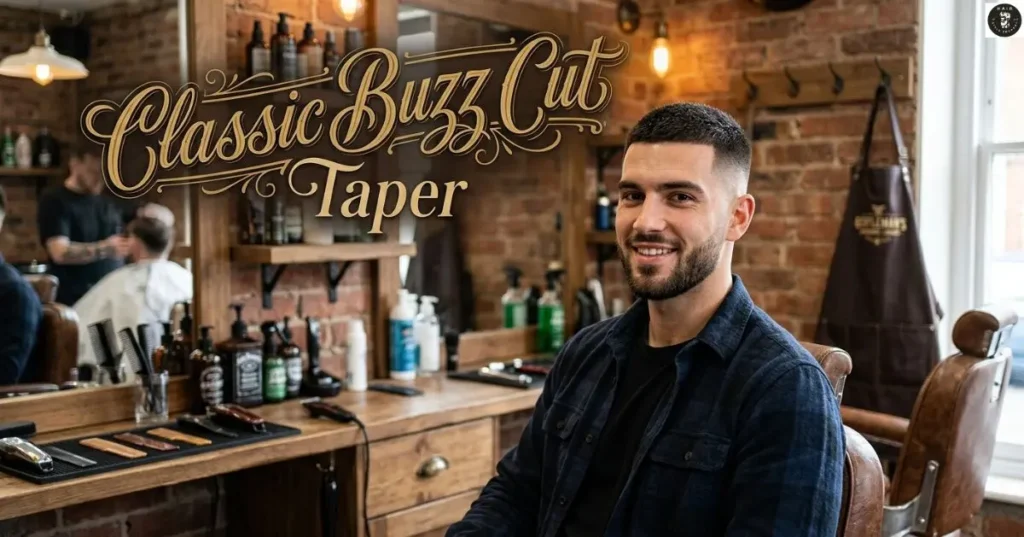
The foundation of the entire list. A uniform guard run across the top, gradually tapering down through the sides and back without ever exposing bare skin.
It’s the lowest-maintenance version here and works as a standalone style or as a base for something more detailed later on.
👉 Read More: Buzz Cut Blond
2. Low Buzz Cut Taper
The taper begins close to the ears and stays subtle throughout, keeping contrast to an absolute minimum. This version is closest in spirit to a traditional, conservative buzz cut and suits workplaces where a more dramatic fade might feel out of place.
3. Mid Buzz Cut Taper
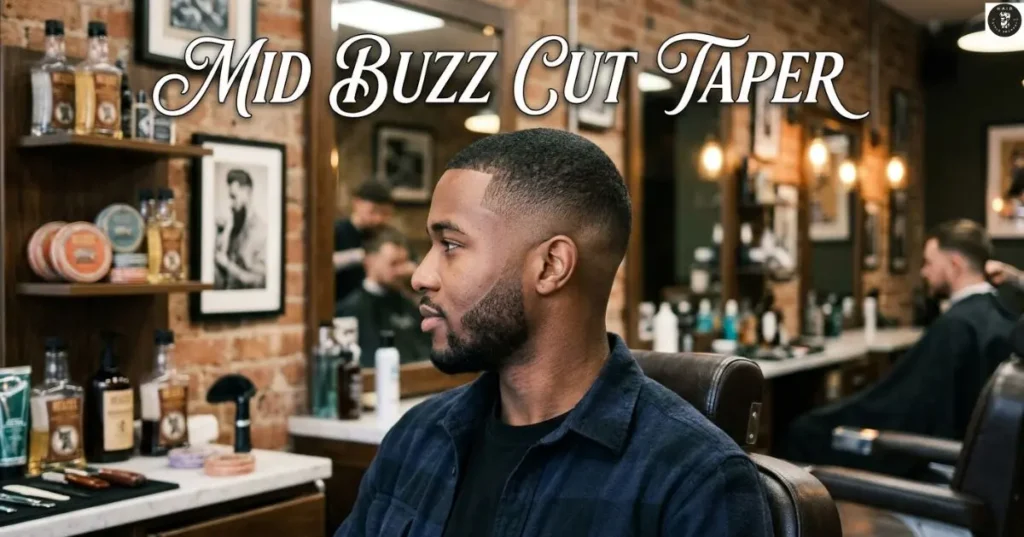
The taper starts around the midpoint of the head, striking a balance between the understated low version and something with a bit more visual structure. It’s a good middle ground for guys who want definition without leaning into the sharper, more graphic look of a full fade.
👉 Read More: Long Buzz Cut Fade
4. High Buzz Cut Taper
Here the taper begins higher up, closer to the crown, giving the cut noticeably more shape and contrast while still stopping short of exposing the scalp entirely. It’s the boldest version on this list without technically crossing over into fade territory.
5. Buzz Cut Taper with Beard
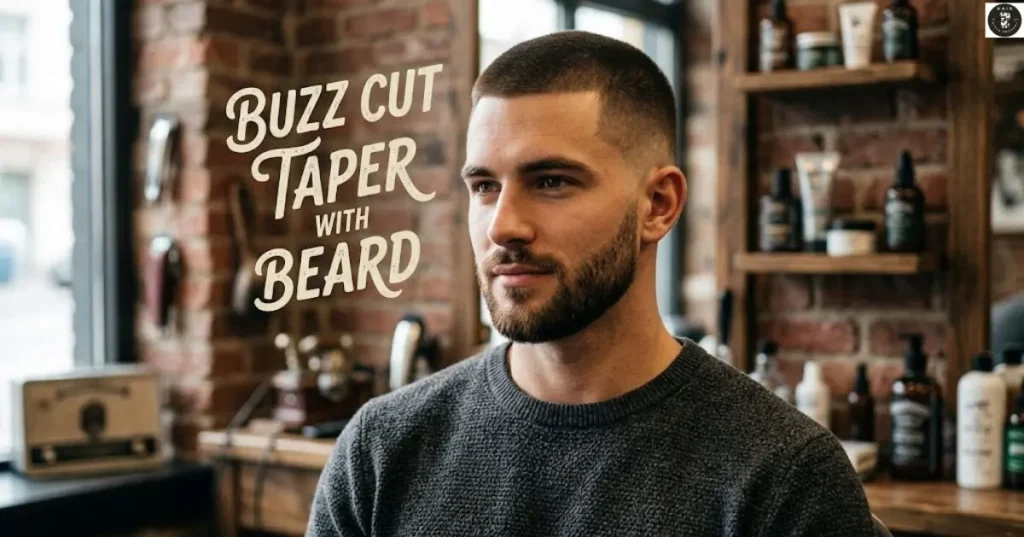
Pairing a tapered buzz with a groomed beard adds structure to the lower half of the face, balancing out the simplicity up top. The taper keeps things understated, while the beard does most of the work in shaping the overall silhouette.
6. Textured Buzz Cut Taper
A touch of length is left on top and point-cut for texture, then tapered down through the sides. This version adds a bit of movement and personality without abandoning the low-maintenance appeal that makes the whole style worth choosing in the first place.
👉 Read More: Buzz Fade
7. Buzz Cut Taper with Line-Up
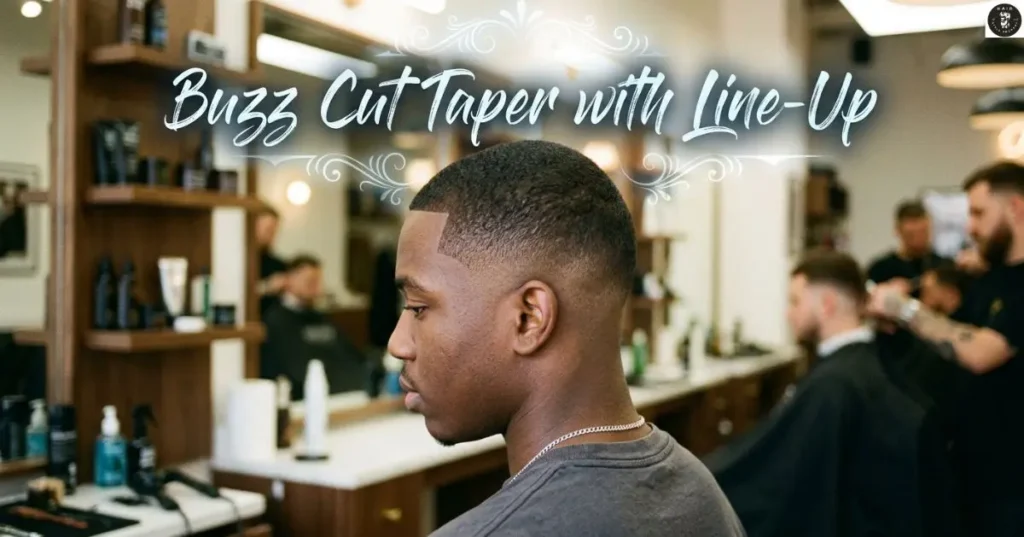
A crisp, defined hairline is cut in at the front, adding a sharp accent to an otherwise soft, gradually tapered cut. It’s a detail-driven combination — the taper keeps things restrained everywhere except the very front, where the line-up brings in some deliberate precision.
8. Curly Buzz Cut Taper
Natural curl texture is left mostly untouched on top, while the sides taper down gradually beneath it. This is a particularly easy option for curlier hair types, since the curl pattern itself provides visual interest without requiring much extra styling.
👉 Read More: Mid Fade Buzz Cut
9. Buzz Cut Taper for Thick Hair
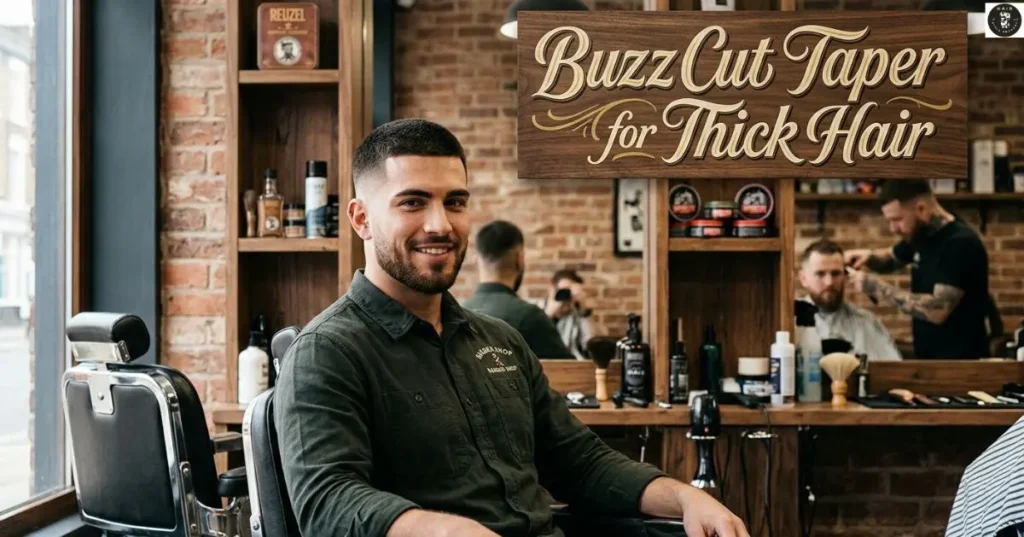
Thicker hair holds shape well with a slightly longer top and a more gradual taper through the sides, which helps manage volume without needing to buzz everything down to the same short length. The taper does the heavy lifting of controlling bulk here.
👉 Read More: Buzz Cut Taper Fade
10. Buzz Cut Taper for Fine Hair
Fine or thinning hair tends to look fuller with a taper rather than a hard fade, since there’s no stark contrast drawing attention to areas with less density. A styling powder can add a bit of extra lift without overcomplicating the cut.
11. Skin-Adjacent Buzz Cut Taper
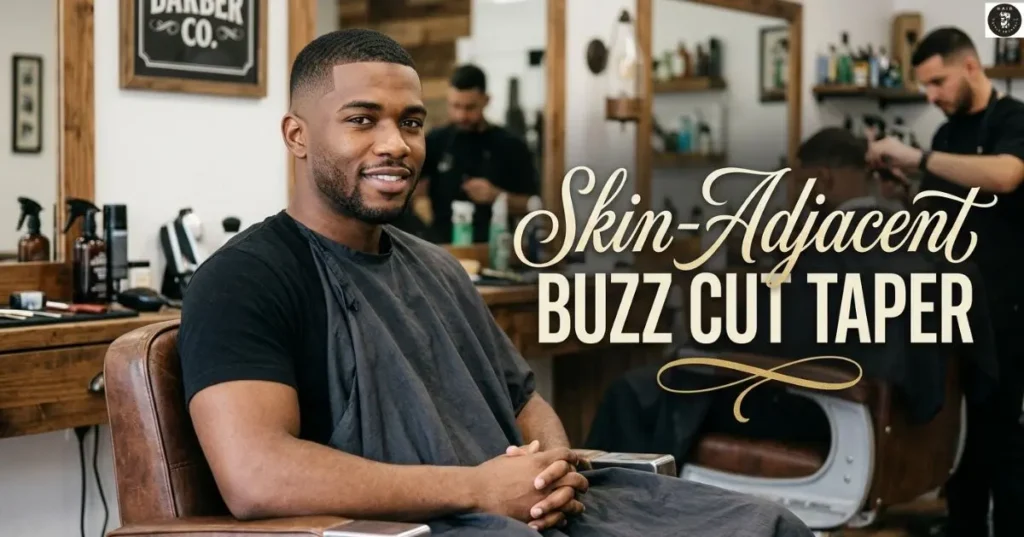
This version pushes the taper as close to skin as possible without technically crossing into fade territory — a very short guard at the base that thins out gradually rather than disappearing entirely.
It’s for guys who want most of the contrast of a fade but still prefer the softer growth pattern a taper offers.
12. Buzz Cut Taper with Hard Part
A shaved line separates the top section from the tapered sides, adding a small but noticeable geometric detail. It’s a subtle way to bring some design element into a cut that otherwise relies entirely on restraint.
13. Military-Style Buzz Cut Taper
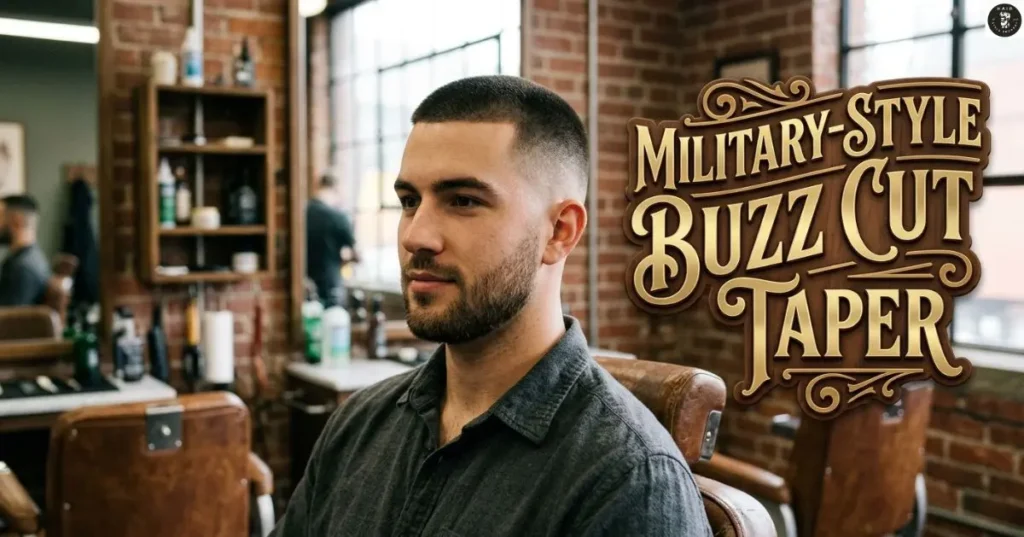
Closer to a traditional service cut, this version keeps everything short, structured, and uniform, with the taper providing just enough graduation to avoid looking completely flat. It’s built for low maintenance above almost everything else.
14. Buzz Cut Taper with Natural Neckline
Rather than shaping a hard line at the back of the neck, this version lets the taper finish naturally, following your actual hairline instead of cutting a defined edge. It’s the softest, least “done” version of the style, and it grows out with barely any visible awkward stage.
15. Buzz Cut Taper with Design Detail
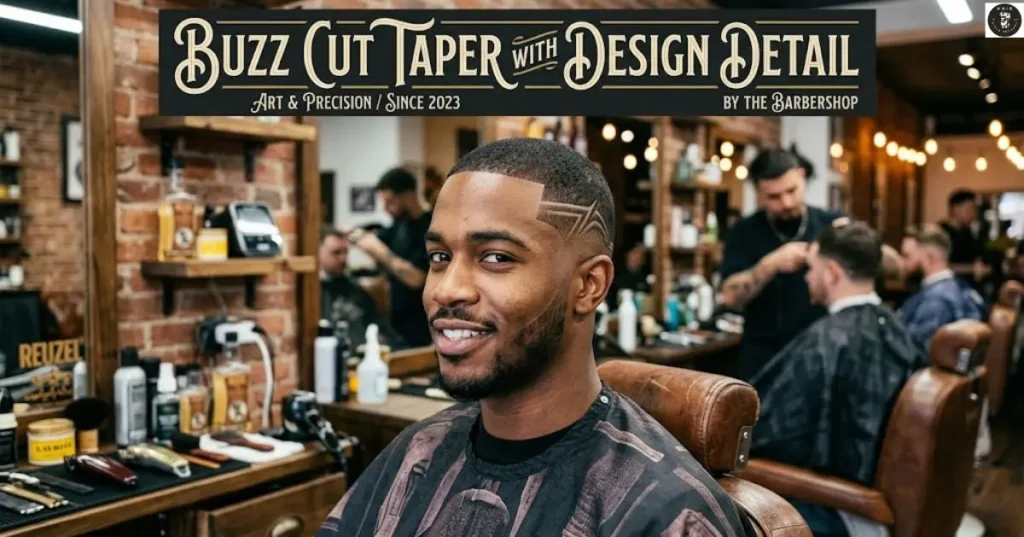
A small shaved line or pattern is added into the taper itself, giving an otherwise minimalist cut a bit of individual flair. It works best on slightly thicker hair, where the added detail stands out clearly against the surrounding length.
Guard Numbers and What They Actually Mean
Knowing your guard numbers before you sit down saves you from leaving with something more (or less) dramatic than you pictured.
| Guard length | Look and feel | Best for |
|---|---|---|
| #1 | Very short, close to the scalp | Bold, minimal finish |
| #2 | Short and clean | Classic buzz cut taper territory |
| #3 | A little fuller | First-time short-hair wearers |
| #4 | Noticeably softer | Guys who want length without much scalp exposure |
For most buzz cut taper styles, the top usually sits somewhere between a #2 and #4, tapering down through shorter guards toward the neckline without ever dropping to bare skin. If you’re unsure where to start, a #3 is a safe, forgiving choice that still delivers a clean, structured look.
How to Ask Your Barber for a Buzz Cut Taper
Getting exactly the right level of restraint in your cut comes down to how clearly you communicate it.
- Specify taper, not fade. These two terms get mixed up constantly, and asking for the wrong one can leave you with far more contrast than you actually wanted.
- Name your guard numbers. Even a rough idea — “shorter on the sides, a #3 or #4 on top” — gives your barber a clear starting point.
- Bring a reference photo. A picture communicates gradient and length far more precisely than words alone.
- Mention your hair texture. Thick, fine, straight, or curly hair all taper differently, and your barber may adjust their approach based on how your hair naturally behaves.
- Decide on the neckline. A natural finish, a soft taper, or a more defined edge all change the overall impression, so it’s worth deciding in advance.
Maintaining a Buzz Cut Taper
One of the quiet advantages of a taper over a full fade is how gracefully it grows out. Because there’s no hard blend line to maintain, you can usually stretch the time between barbershop visits to three or four weeks without the cut looking noticeably unkempt.
That said, if your version includes a line-up, hard part, or design detail, those elements will need more frequent touch-ups to stay sharp, since precision details grow out faster than the overall taper does.
My Final Thoughts:
The buzz cut taper proves that a short haircut doesn’t need scalp exposure or dramatic contrast to look sharp.
It’s precision expressed quietly — a cut built on gradual change rather than a hard line, which makes it one of the most low-maintenance, universally flattering short styles available.
Whether you keep it completely classic or add in a beard, a line-up, or a bit of texture, there’s a version among these 15 that fits the level of restraint you’re going for.
FAQs
What is the difference between a buzz cut taper and a buzz cut fade?
A taper gradually shortens hair without ever exposing bare skin, so your natural hairline stays visible throughout. A fade, on the other hand, blends all the way down to skin at some point, creating much sharper contrast.
How often do I need to get a buzz cut taper trimmed?
Because there’s no hard blend line to maintain, a buzz cut taper generally holds its shape for three to four weeks before it starts looking noticeably grown out.
Does a buzz cut taper suit every hair type?
Yes, with some adjustment. Thicker hair usually looks best with a slightly longer top and a more gradual taper to manage volume, while fine or thinning hair benefits from the softer contrast a taper provides compared to a fade.
Can I do a buzz cut taper at home?
A simple, uniform taper is manageable with a basic clipper guard set if you’re comfortable blending guard lengths gradually. That said, achieving a smooth, even gradient — especially around the ears and neckline — takes practice, and any added detail like a line-up or hard part is best left to a professional barber.
Is a buzz cut taper good for a professional or office setting?
Definitely. Because it avoids the stark scalp exposure of a full fade, a buzz cut taper tends to read as clean and polished rather than edgy, making it one of the safer short-hair choices for conservative workplaces while still looking deliberate and well put-together.

I’m M Ahmad Ansari, founder and content creator at HairstyleJournal. With 3+ years of experience researching hairstyles, haircuts, and men’s grooming, I create practical, easy-to-understand content to help readers choose, style, and maintain the right haircut with confidence.
4 Comments