41 Mid Fade Buzz Cut Styles That Look Sharp in 2026
There’s a reason the mid fade buzz cut keeps showing up on barbershop mood boards year after year. It’s not flashy, it doesn’t demand ten minutes with a blow-dryer every morning, and it somehow manages to suit almost every face shape, hair type, and lifestyle that walks through the door.
Whether you’re after something clean for the office, sharp enough for a night out, or low-maintenance enough to survive a busy week, the mid fade buzz cut sits at the center of men’s grooming for good reason.
This guide breaks down everything you need to know: what a mid fade buzz cut actually is, how it compares to a low fade or high fade, which face shapes and hair types it suits best, how to talk to your barber about it, which products actually help, and 41 different ways to wear it in 2026.
By the end, you should have a clear idea of exactly which version belongs on your head next.
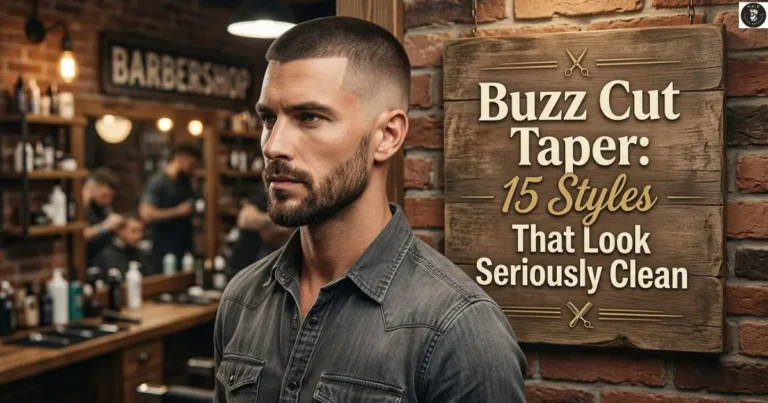
Also Read: Buzz Cut Taper: 15 Styles That Look Seriously Clean
What Is a Mid Fade Buzz Cut?
A mid fade buzz cut is a short, low-maintenance men’s haircut where the sides and back are clipped down and gradually blended into slightly longer hair on top.
The word “mid” refers to where the fade begins — roughly at the midpoint between the ear and the temple — which puts it directly between a subtle low fade and a bold, dramatic high fade.
Unlike a taper, which simply shortens gradually and always leaves a bit of length near the hairline, a true fade drops all the way to skin at some point along its length.👉 Read More: Buzz Cut taper
A mid fade buzz cut usually keeps the top itself buzzed short too — anywhere from a triple zero up to a #3 or #4 guard — rather than leaving it long enough to style into a quiff or comb-over.
That combination of a buzzed top and a mid-level fade is what makes this cut so easy to maintain: there’s simply not enough hair anywhere on your head to look messy, even on your laziest mornings.
Because the blend point sits in the middle of the head rather than right up near the crown or tucked in close to the ear, it tends to read as balanced rather than extreme.
It’s sharp enough to look intentional, but not so aggressive that it overwhelms softer facial features. That’s a large part of why barbers recommend it to first-time buzz cut wearers more than almost any other fade variation.
Mid Fade Buzz Cut vs Low Fade vs High Fade
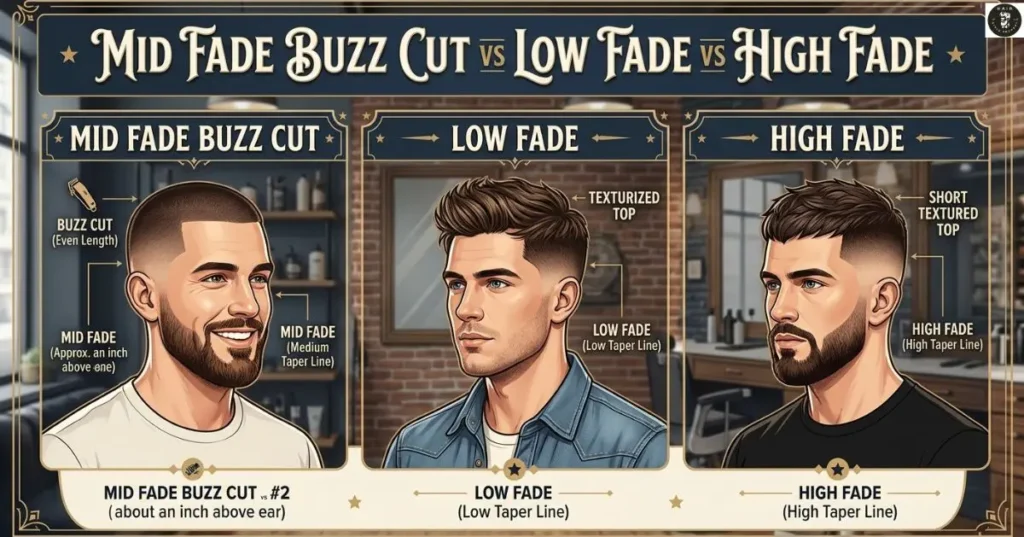
Before you sit in the barber’s chair, it helps to understand exactly what separates these three fade heights, since the terminology gets confused constantly.
Low fade. The blend begins just above the ear, close to the hairline, and stays fairly subtle. It’s the most conservative of the three, works well in professional settings, and barely changes the overall silhouette of your head.
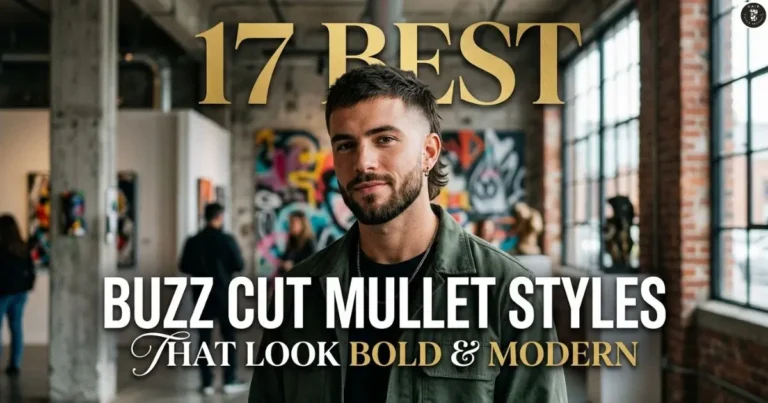
A low skin fade is a popular choice for guys who want a clean look without much contrast. Mid fade buzz cut. The blend starts roughly at the midpoint of the head, usually a couple of finger-widths above where a low fade would begin. 👉 Read More: Buzz Cut Mullet
This creates noticeably more contrast than a low fade while still staying well short of the crown. It’s the most versatile of the three and tends to suit every face shape without much adjustment.
High fade. The blend climbs all the way up near the crown, creating the most dramatic contrast between skin and hair. High fades pair especially well with angular face shapes and thicker top sections, since there’s more visual separation for a defined top style to stand out against.
It’s also worth clarifying the difference between a fade and a taper, since barbers hear this mix-up constantly. A taper is a gradual, natural decrease in length that never fully drops to skin — your natural hairline stays visible throughout.
A fade, on the other hand, blends all the way down to bare skin at some point, creating a much sharper, more dramatic transition. If you ask for a “fade” when you actually wanted a soft taper, you may be surprised by how much more aggressive the finished result looks.
👉 Read More: Buzz Cut Long Hair
Why a Mid Fade Buzz Cut Works for Almost Any Face Shape
One of the biggest selling points of the mid fade buzz cut is how forgiving it is. Barbers will often steer nervous first-timers toward this exact style because it rarely goes wrong.
Round face shapes benefit from the added height and vertical definition a buzzed top provides, especially when paired with tighter sides that reduce the appearance of width.
Keeping the sides tight and adding a touch of height on top helps elongate a rounder face rather than emphasizing its width.
Square face shapes look sharper without appearing boxy, particularly when the fade uses softer, more gradual blending rather than an abrupt skin-tight line. Curved edges and a softer transition tend to work better here than harsh, high-contrast blends.
Oval face shapes can wear almost any version on this list without much modification — this is widely considered the most versatile face shape for haircuts in general. 👉 Read More: Buzz Cut Blond
Diamond face shapes do well with a bit of extra width or texture up top, since diamond faces are often narrower through the forehead and jaw and benefit from styles that build volume rather than flatten it.
Heart-shaped faces tend to look best with fuller top sections that balance a narrower chin, paired with a fade that keeps the sides from adding extra width near the temples.
Triangle face shapes generally do well with cuts that add fullness higher up on the head, drawing the eye upward rather than toward a wider jawline. 👉 Read More: Long Buzz Cut Fade
The one real exception across all face shapes is noticeable hair thinning. If your hair density has started to drop on top, going for a dramatically short buzz can sometimes make the thinning more obvious rather than less.
In that case, a slightly longer top length, a lower blend point, or a styling powder that adds the illusion of fullness usually photographs and wears better than the most extreme version of the cut.
Buzz Cut vs Crew Cut: Where the Mid Fade Fits In
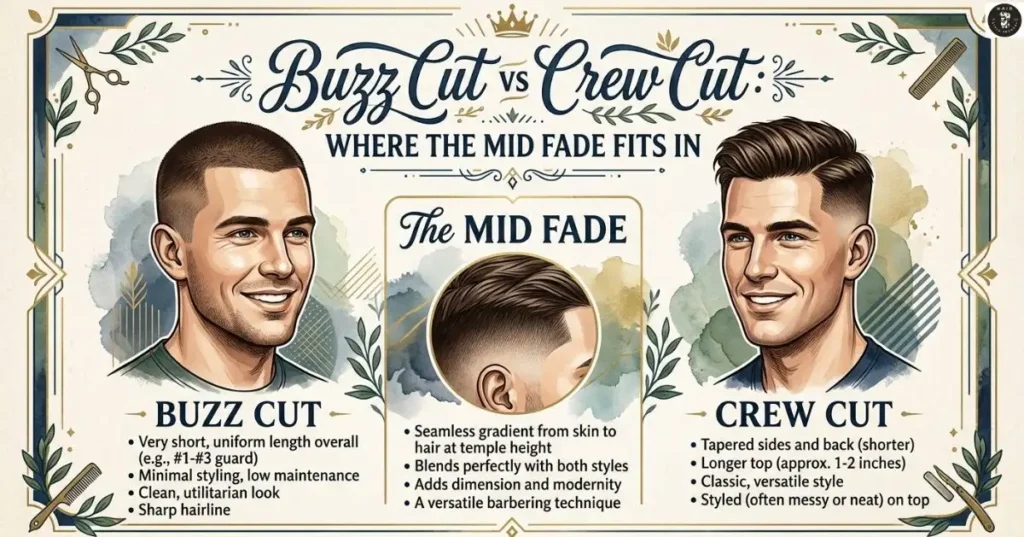
It’s worth understanding where the mid fade buzz cut sits relative to its closest relatives, since the terms buzz cut and crew cut get used interchangeably far more often than they should.
Historically, a true buzz cut meant running clippers over the entire head to create one uniform length — sides, back, and top all matching.
A crew cut, by contrast, kept the sides and back at a shorter uniform length while leaving the top slightly longer, which is essentially where the modern idea of a “fade” started to take shape, since the shorter sides had to blend into the longer top somehow.
A mid fade buzz cut borrows from both traditions: it keeps the buzzed, low-maintenance top of a traditional buzz cut, but incorporates the graduated blending of a crew cut, with the fade positioned at the midpoint of the head rather than left as a hard, disconnected line.
👉 Read More: Buzz Fade
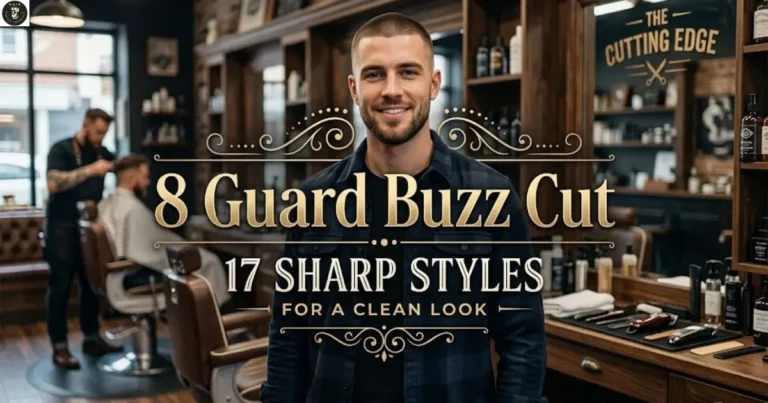
Guard Lengths Explained
Knowing your guard numbers before you sit down is one of the easiest ways to avoid leaving the barbershop disappointed. A single guard number can be the difference between a bold, scalp-baring finish and a softer, more forgiving one.
| Guard length | Look and feel | Best for |
|---|---|---|
| Triple zero (0000) | Skin-close, essentially bare scalp | Maximum contrast against the fade |
| #1 | Very short, lots of scalp visible | Bold, stark finish |
| #2 | Short, clean, classic buzz cut territory | Guys who want a proper buzz without extreme exposure |
| #3 | A little fuller, more forgiving | First-time buzz cut wearers |
| #4 | Noticeably softer with real coverage | Guys who want the buzzed look without much scalp exposure |
For a mid fade buzz cut, the sides typically drop to a triple zero or a #1 at their shortest point, gradually building up through the guard lengths until they blend into the top, which usually sits somewhere between a #2 and a #4 depending on how much length you want to keep.
If you’re unsure where to start, a #2 or #3 on top is generally the safest choice — you’ll get the unmistakable buzzed look without going so short that a bad first experience puts you off the style entirely.
👉 Read More: Buzz Cut Taper Fade
How to Choose the Right Mid Fade Buzz Cut for Your Hair Type
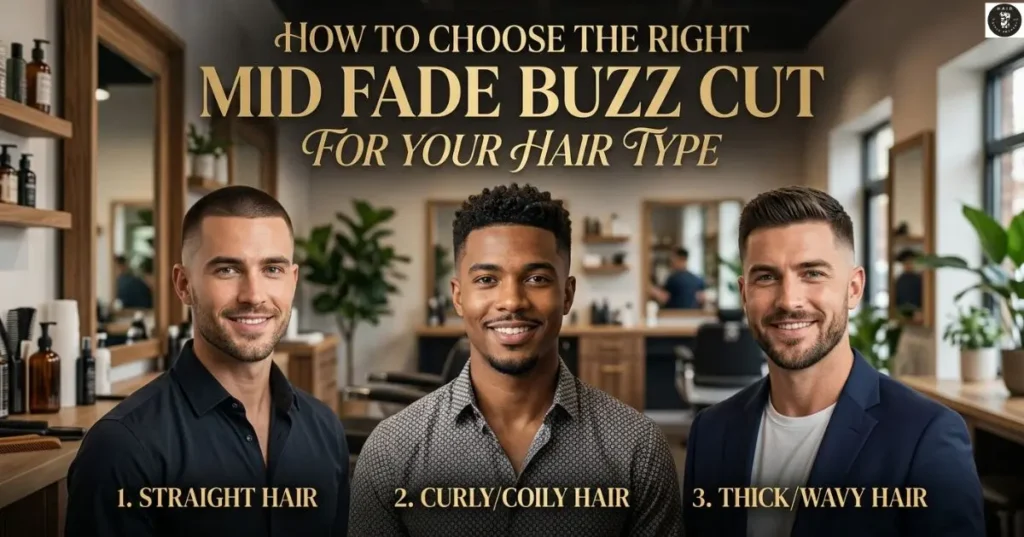
Face shape is only half the equation — your natural hair texture plays just as large a role in how any given mid fade buzz cut will actually sit once it grows out even slightly.
Thick or curly hair tends to hold shape well with tighter sides and a bit more length left on top, since curl pattern naturally adds volume that a fully buzzed top might not need extra help with. A curl-defining cream or texture clay keeps curls looking intentional rather than puffy.
Straight hair looks sharpest with either very short, low-volume tops or the addition of some texture through a light fringe, since straight hair has a tendency to lie flat and can look plain without either extra length or product-driven texture.
Wavy hair sits somewhere in between and generally responds well to lightweight creams that enhance natural movement without weighing it down.
Fine or thinning hair benefits from styling powder or clay that builds the illusion of density, along with a slightly longer top length and a lower blend point that doesn’t draw too much attention to areas of reduced coverage.
Coily and afro-textured hair often looks best with a rounded, higher-volume top left mostly natural, paired with a tight, clean fade beneath it for contrast — this combination shows up throughout the style list below.
Whatever your texture, it’s worth having an honest conversation with your barber about how your hair actually behaves day-to-day rather than just pointing at a photo and hoping for the best.
Hair density, growth pattern, and natural texture all affect how faithfully any given style will translate onto your own head.
How to Ask Your Barber for a Mid Fade Buzz Cut
Getting the exact mid fade buzz cut you have in your head starts with clear communication in the chair. A few things worth covering before the clippers come out:
- Bring a reference photo. A picture communicates the exact blend height, top length, and finish far more accurately than trying to describe it verbally.
- Point out where you want the fade to start. For a true mid fade, ask specifically for the blend to begin around the midpoint of your head, not up near the crown or down close to the ear.
- Clarify fade versus taper. As mentioned above, these two terms get confused constantly, and asking for the wrong one can leave you with a much more dramatic (or much softer) result than you wanted.
- Describe the top. Let your barber know exactly how much length you want left on top, whether you plan to style it forward, back, or leave it natural, and how much upkeep you’re realistically willing to put in.
- Mention the neckline and blend. Specify whether you want a full skin fade, a softer taper finish, or a natural, unshaped neckline to complete the cut.
- Ask for their honest opinion. A good barber will tell you if a particular version won’t suit your face shape, hairline, or hair density — don’t be afraid to ask what they’d genuinely recommend.
The 41 Best Mid Fade Buzz Cut Styles for 2026
1. Classic Mid Fade Buzz Cut
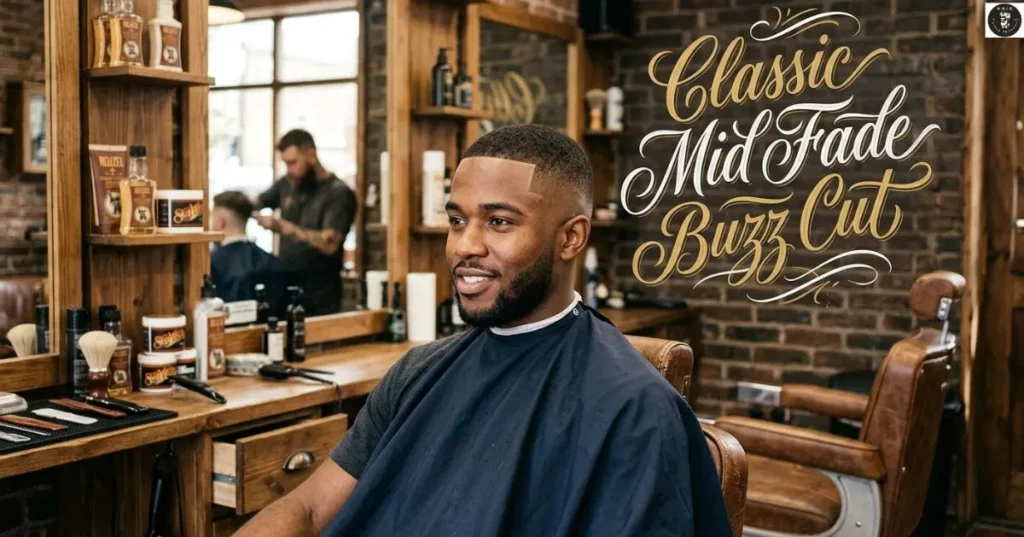
The baseline version of this entire list — clippers taken evenly over the top, blended cleanly into a mid-level fade through the sides and back. There’s no fringe to manage, no length to style, and nothing that requires more than a towel-dry to look finished.
It’s the version most guys start with before experimenting with anything more elaborate, and it remains a completely valid long-term choice on its own.
2. Mid Fade Taper
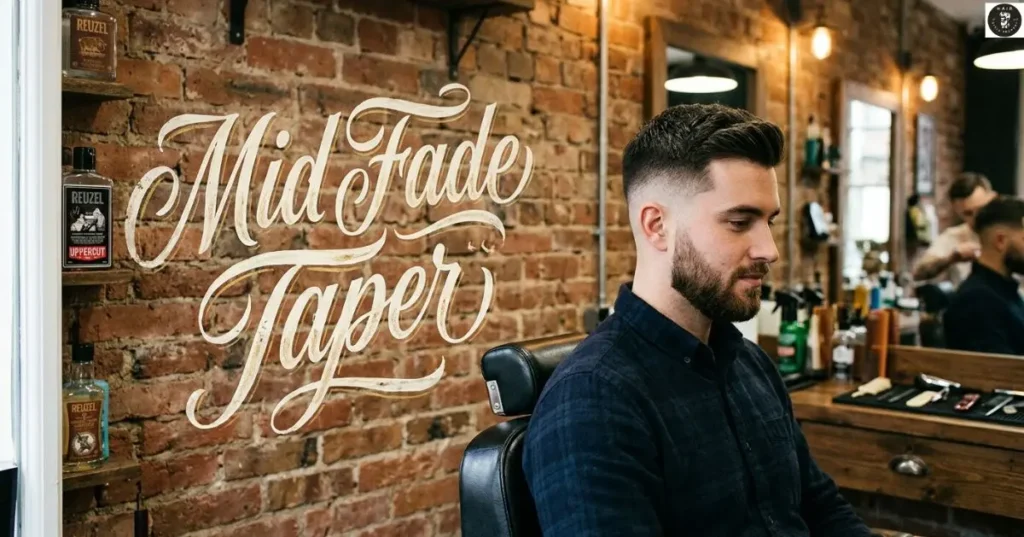
A softer alternative to a full fade, this version blends gradually rather than dropping all the way to skin at any point. It keeps a touch of your natural hairline visible throughout, which makes it a good option if you want definition without the stark, high-contrast look of a true fade.
This is often the version barbers recommend to clients who think they want a fade but are actually picturing something gentler.
3. Mid Skin Fade Buzz Cut
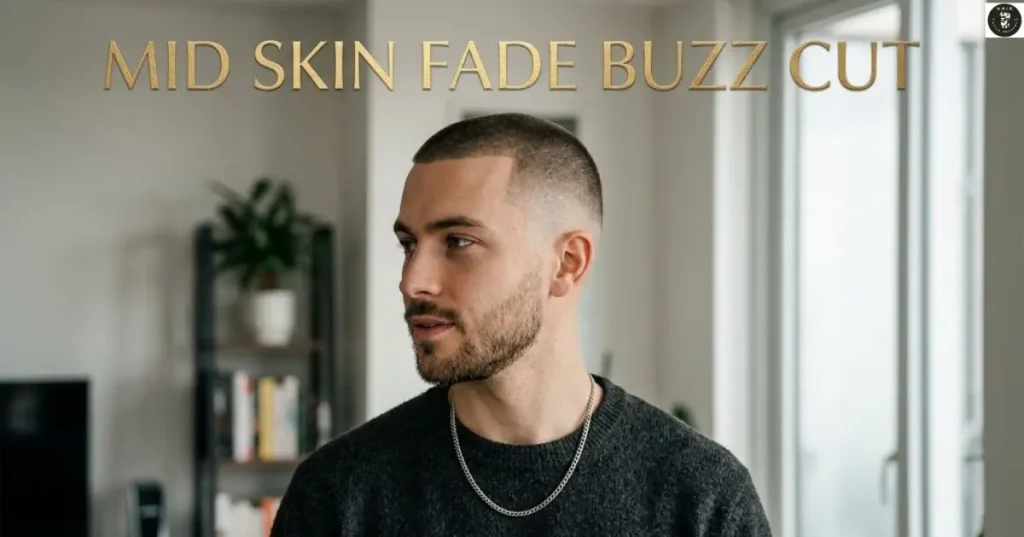
This version takes the sides all the way down to bare skin before building back up into the buzzed top, creating the sharpest possible contrast within the mid fade family.
It’s the look most people picture the moment someone says “fade,” and it photographs particularly well against darker hair colors, where the contrast against pale scalp reads clearly even from a distance.
4. Mid Drop Fade
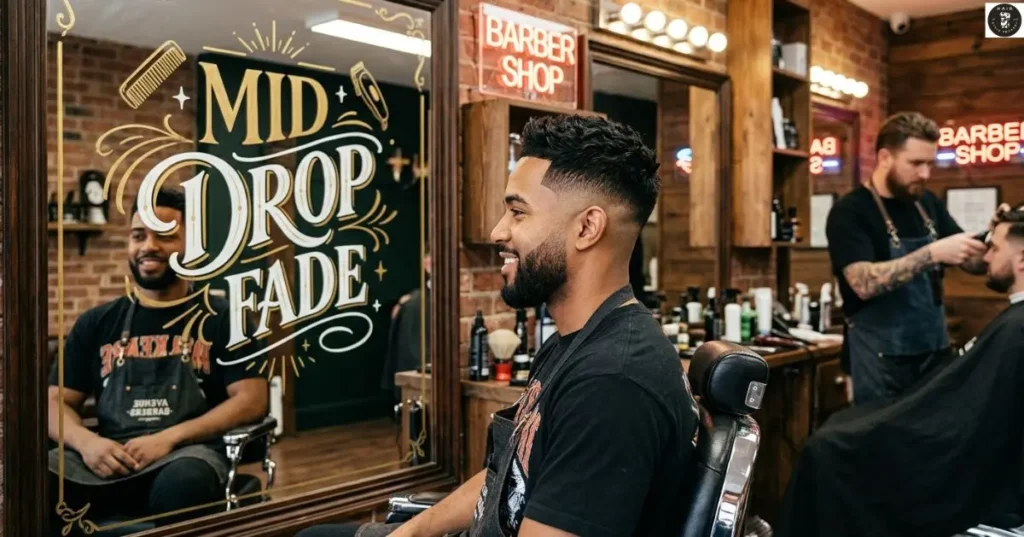
Instead of running in a straight line, the fade curves downward behind the ear, following the natural curve of the skull rather than cutting across it in a hard, flat line.
This creates a more organic, sculpted transition and tends to flatter guys with strong jawlines, since the curved fade line draws the eye along the profile rather than across it.
5. Mid Burst Fade
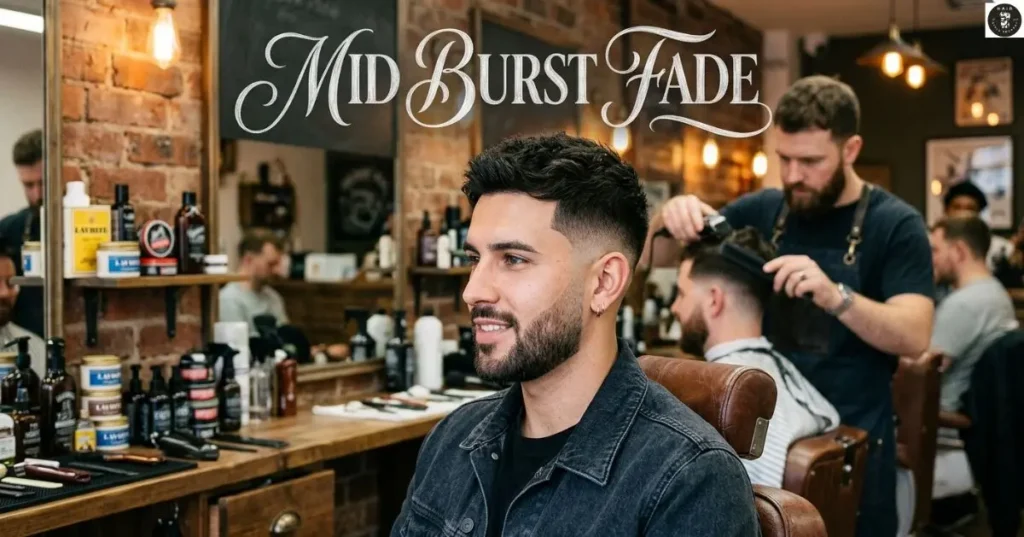
Similar in spirit to the drop fade but with a rounder, more pronounced curve around the ear itself, the burst fade adds a softer, sculpted shape to the blend. It pairs particularly well with thicker, choppier top sections, where the rounded fade line balances out the extra volume sitting above it.
6. Mid Fade with Hard Part
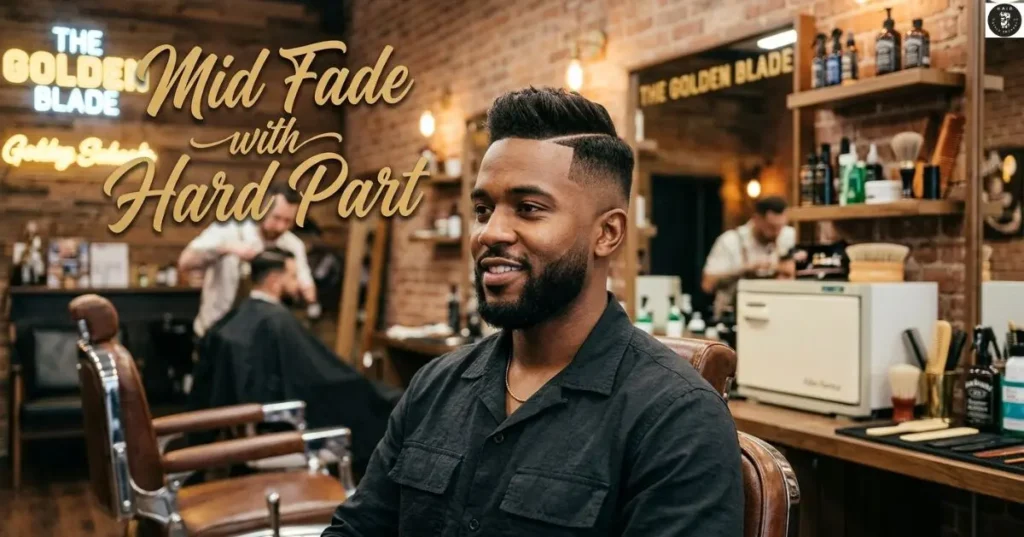
A shaved line, cut in with a razor or detail trimmer, separates the buzzed top from the faded sides, adding a crisp, geometric accent to what would otherwise be a fairly simple cut. It’s a small detail, but it changes the entire personality of the style, giving it a more deliberate, designed feel.
7. Bald Mid Fade
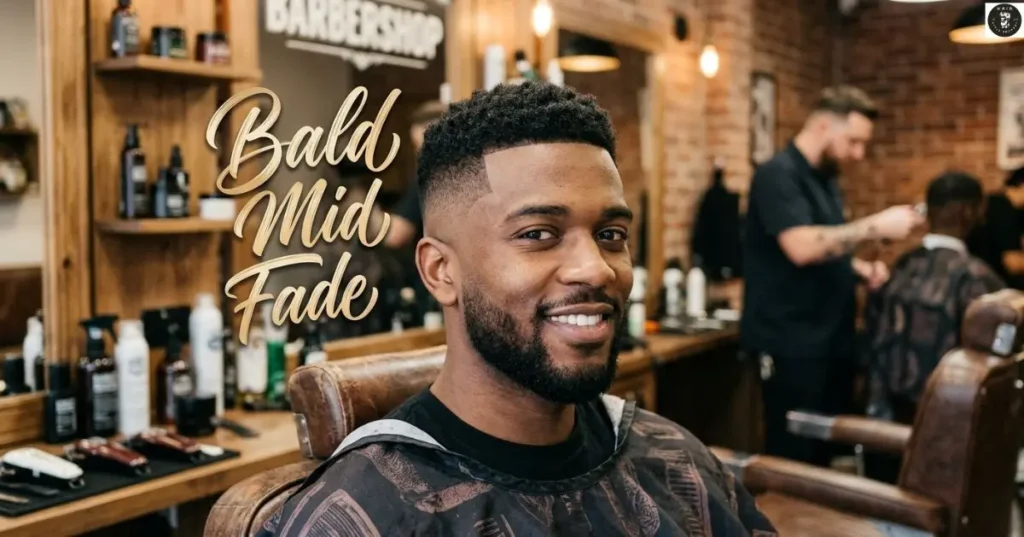
This version pushes contrast to its absolute maximum — skin-tight sides that fade into a short, uniform top, with almost no gradual transition zone in between.
It’s built entirely around precision and structure, and it demands very little daily maintenance beyond keeping the fade line fresh with regular barber visits.
8. Buzz Cut Mid Fade Crew Style
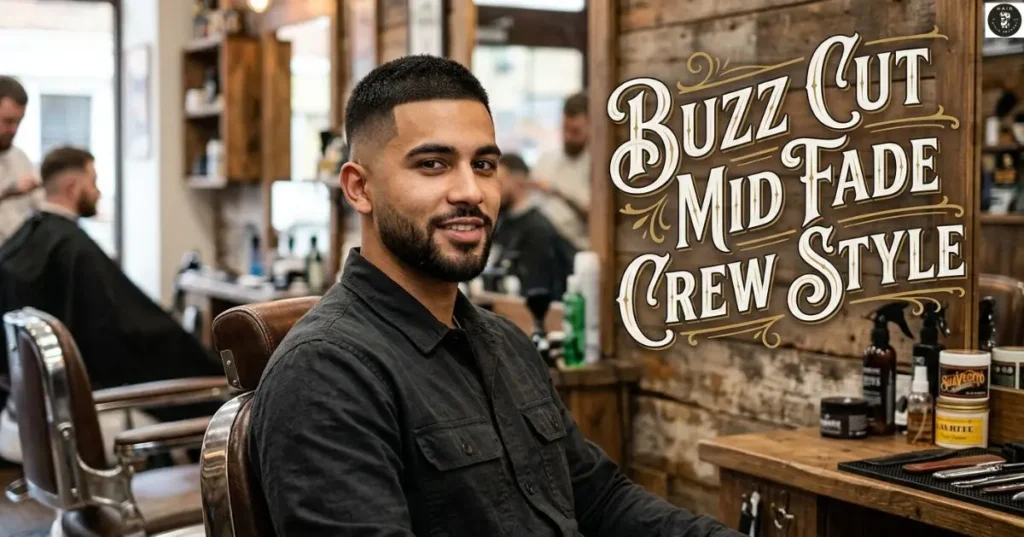
Borrowing directly from the classic crew cut, this version keeps slightly more length and structure on top than a standard buzz, while still fading the sides down at the midpoint of the head.
The result is a rounder, more polished silhouette than a pure buzz cut, without sacrificing the low-maintenance appeal that makes the style so popular in the first place.
9. Mid Temple Fade
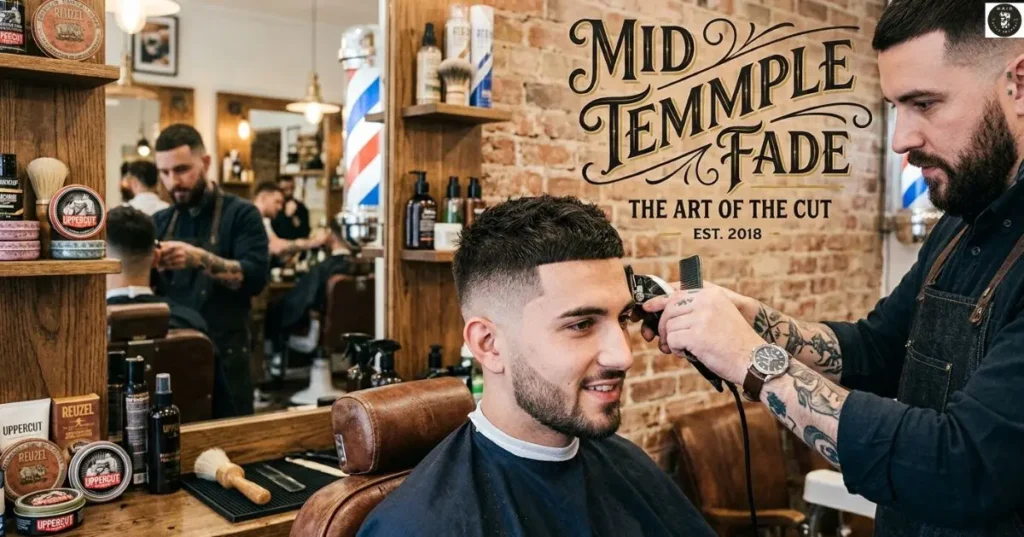
Here, the blend point starts right at the temple, framing the front of the face with a sharp, defined line. It’s a particularly good option for guys with strong brow bones or defined cheekbones, since the fade draws attention directly to those features.
10. Mid Fade Induction Style
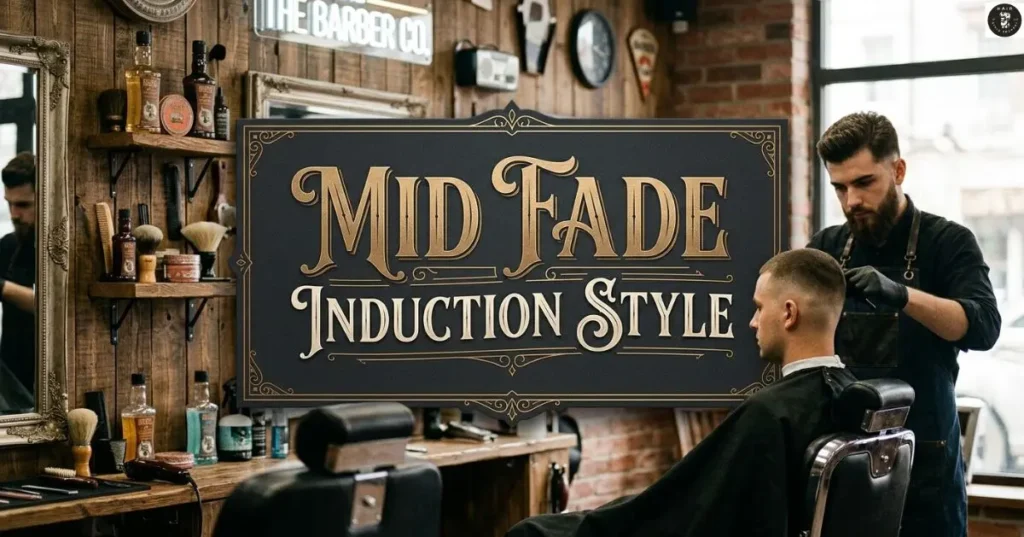
This combines the ultra-short, near-uniform look of a traditional induction cut with a mid-level fade rather than the completely flat, unfaded length an induction cut usually carries.
The result keeps that bold, close-cropped feel while still incorporating some graduated blending through the sides.
11. Mid Fade Crew Cut
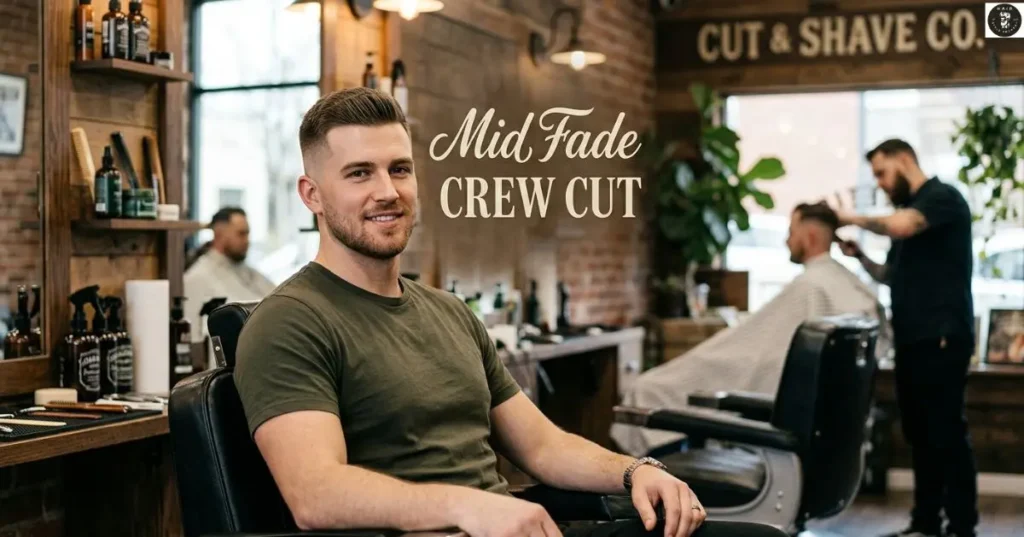
A more traditional take that keeps the top noticeably longer than most buzzed styles on this list — often in the #3 to #4 guard range — while fading tightly through the sides and back.
It reads as more polished and professional than a fully buzzed top, making it a strong option for workplaces with more conservative grooming expectations.
12. Textured Crop Mid Fade
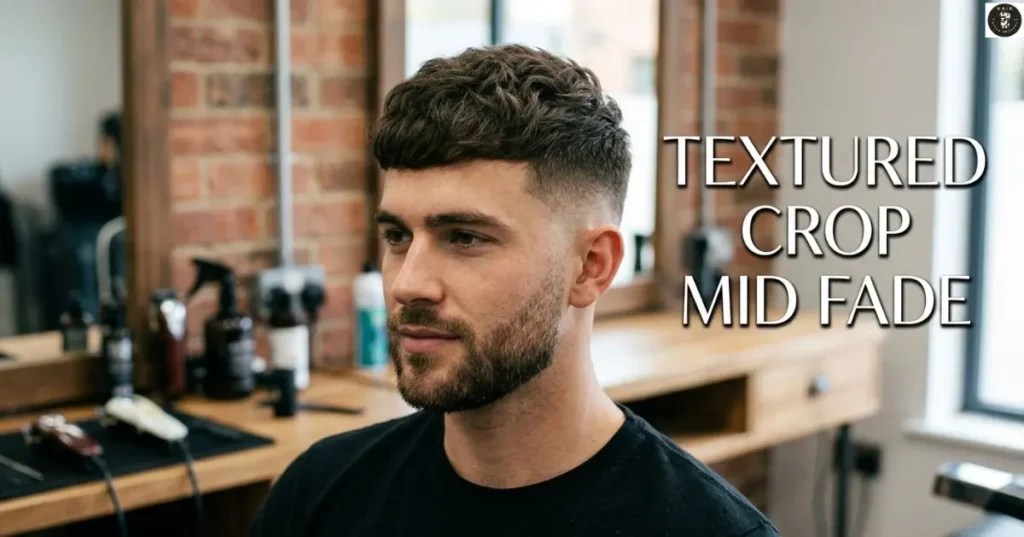
A few extra millimeters of length on top get point-cut with scissors to create texture and movement, then paired with a tight, clean mid fade beneath.
This has been one of the most consistently requested styles among younger guys for the past several years, and it works especially well styled forward with a matte clay.
13. Mid Fade Quiff Buzz
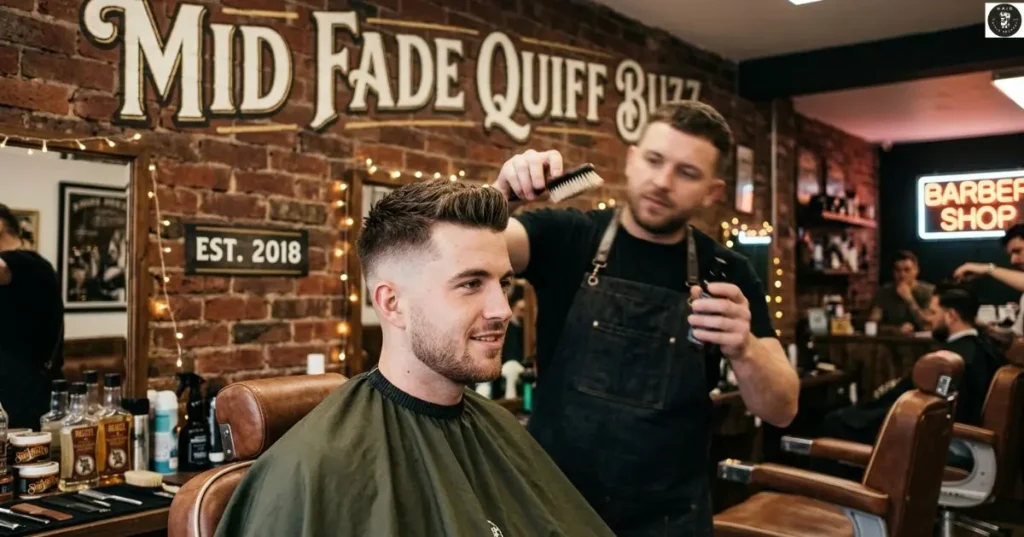
The front section is left just long enough to lift and push slightly upward and back, creating a small amount of height without requiring any real length. Blended into a mid fade below, it adds a bit of personality to an otherwise minimal cut without demanding much extra styling time.
14. Mid Fade Comb-Over Buzz
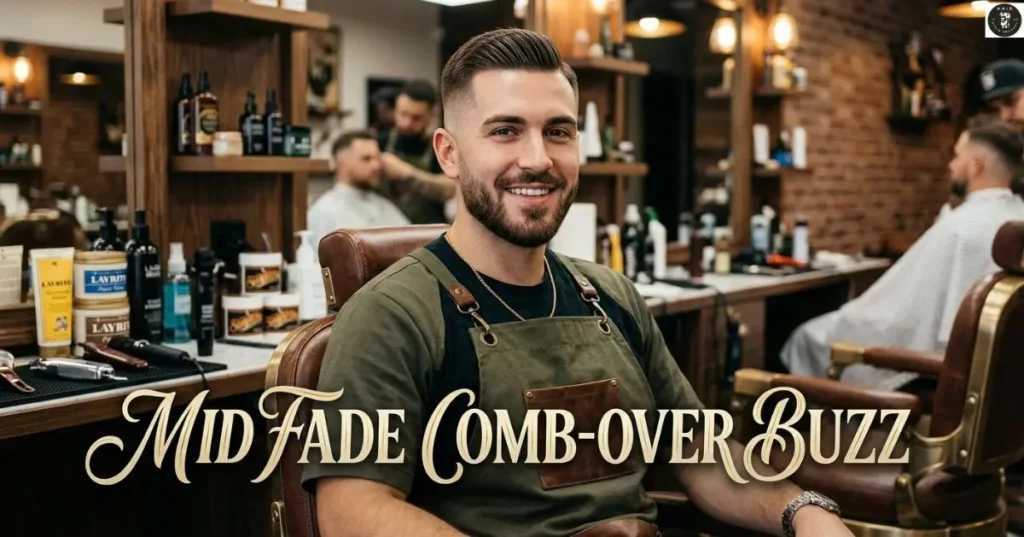
A short, neatly combed side part sits on top of a clean mid fade, striking a balance between smart and low-maintenance. It’s a strong choice for office environments or client-facing roles where a fully buzzed top might read as too casual.
15. Mid Fade Slick Back
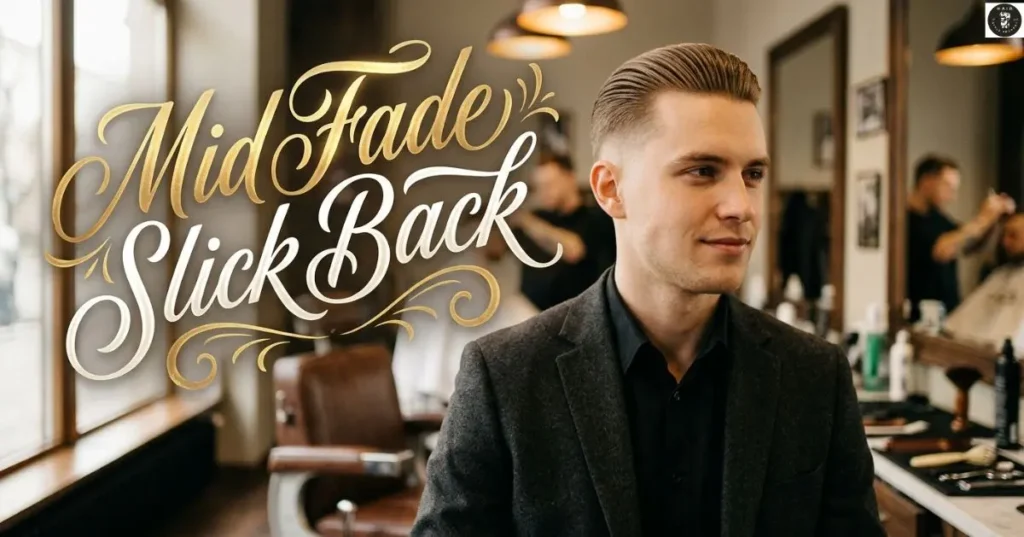
Slightly longer top hair is blow-dried backward and set with a lightweight pomade or styling cream, creating a sleek, flowing finish that contrasts sharply against tightly faded sides.
It leans a little more polished and grown-up than most entries on this list, without requiring anywhere near the length a traditional slick-back demands.
16. Disconnected Mid Fade
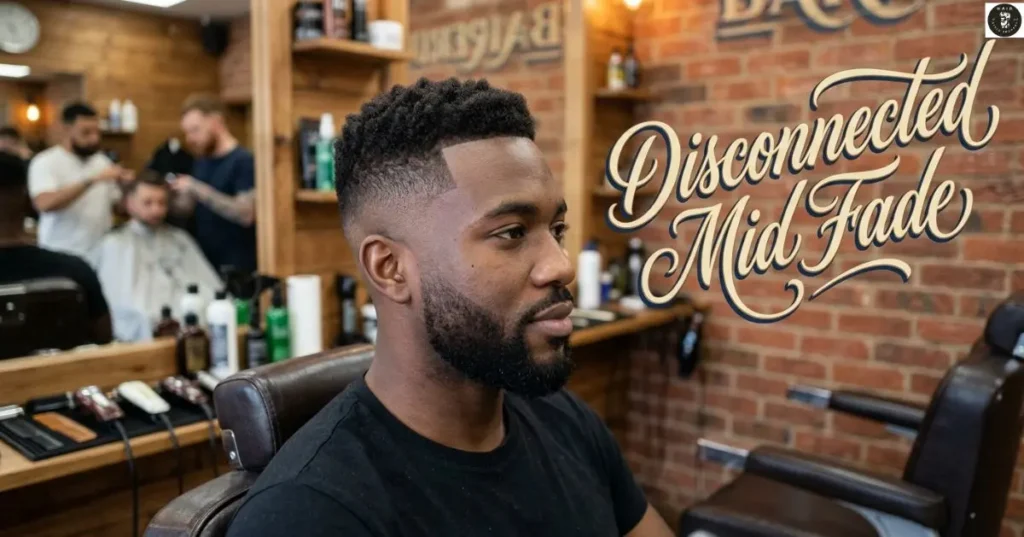
Rather than a smooth, graduated blend, this version leaves a deliberate, undisguised line where the longer top meets the faded sides.
It’s a bolder statement than most of the styles here, favoring contrast over subtlety, and works particularly well for guys who want their haircut to feel like an intentional style choice rather than something understated.
17. Mid Fade with Beard
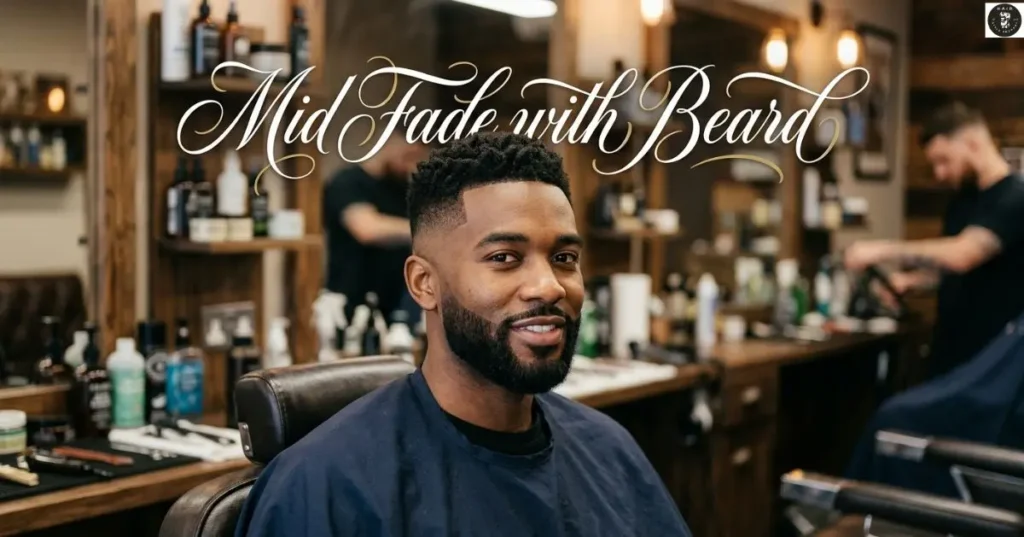
Pairing the buzzed top and faded sides with a well-groomed beard adds balance to the lower half of the face, and it’s a particularly strong combination for rounder face shapes that benefit from the added definition along the jawline.
Keeping the beard shape sharp and the fade-to-beard blend clean is what separates this look from simply not shaving for a while.
18. Mid Fade Mohawk
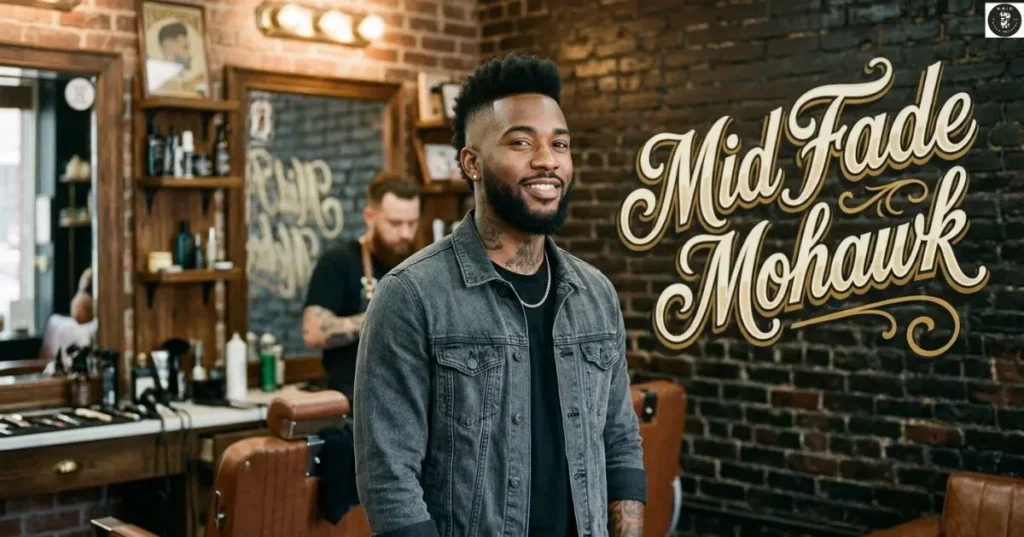
A narrow strip of longer hair runs down the center of the head while the sides fade tightly beneath it, creating one of the boldest, most statement-driven looks on this entire list. It’s not a subtle choice, but it remains a genuinely popular option among guys who want their haircut to do some of the talking.
19. Mid Fade Curly Top
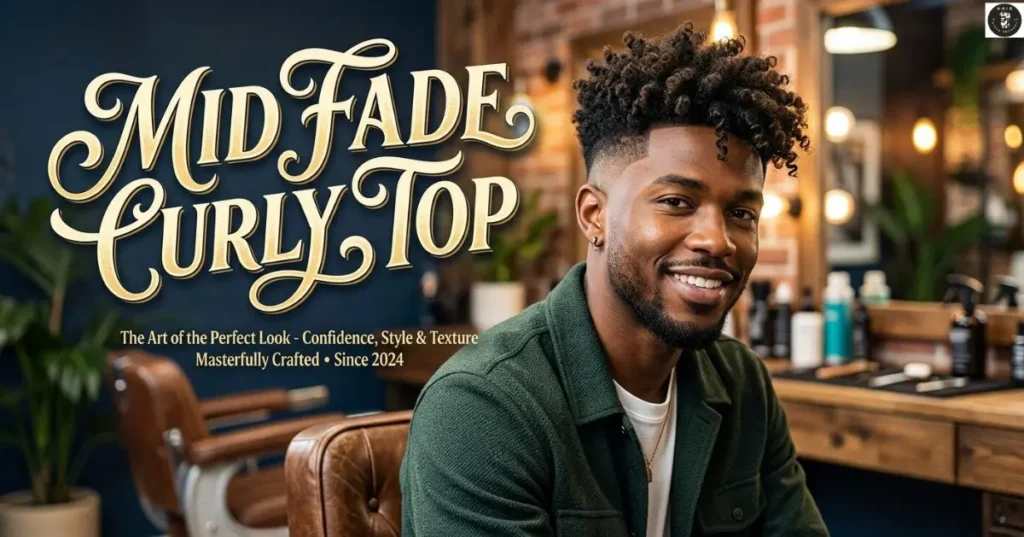
Natural curl texture is left mostly untouched on top, while the sides are kept short and cleanly faded beneath it. This is one of the lowest-effort styles here for guys with naturally curly hair, since the curl pattern itself provides all the visual interest without requiring much additional styling.
20. Mid Fade Afro Buzz
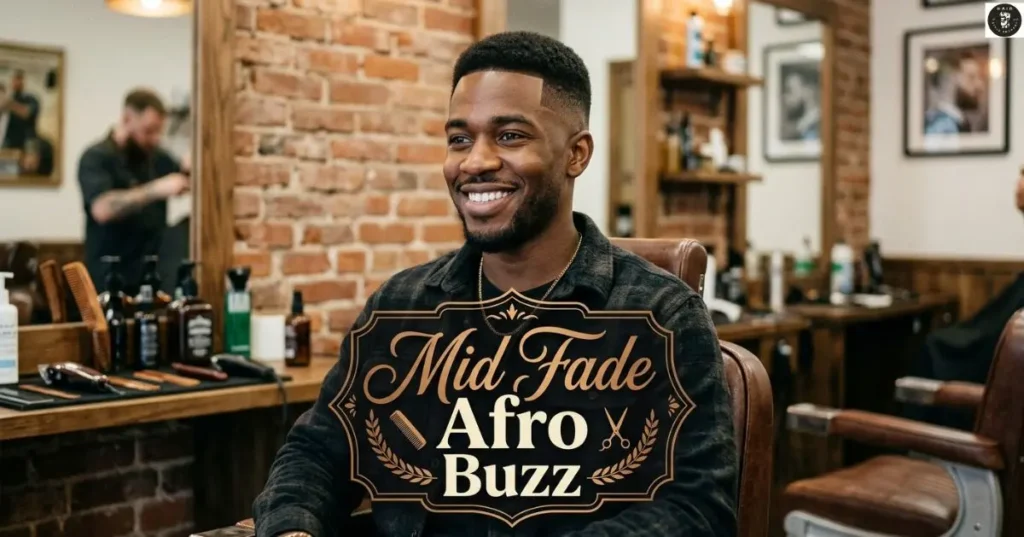
A rounded, higher-volume afro sits on top, contrasted sharply against a clean, mid-level fade through the sides. It’s a particularly striking combination for coarser or coily hair textures, and it tends to flatter round and oval face shapes especially well.
21. Mid Fade Fringe
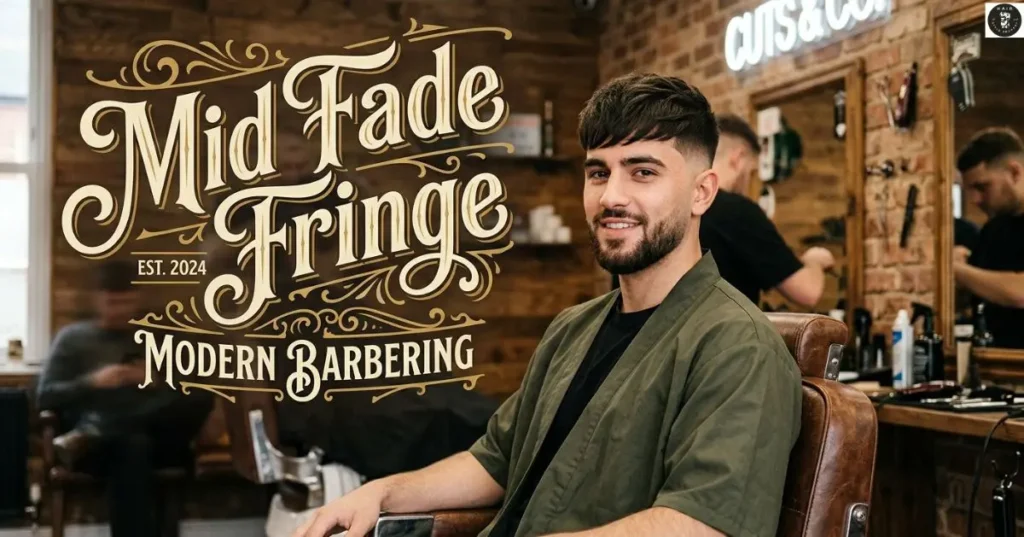
A short section of hair is styled forward into a light fringe across the forehead, then faded cleanly into the sides. It reads as a bit more youthful and casual than most of the sharper, more structured entries on this list.
22. Mid Fade French Crop
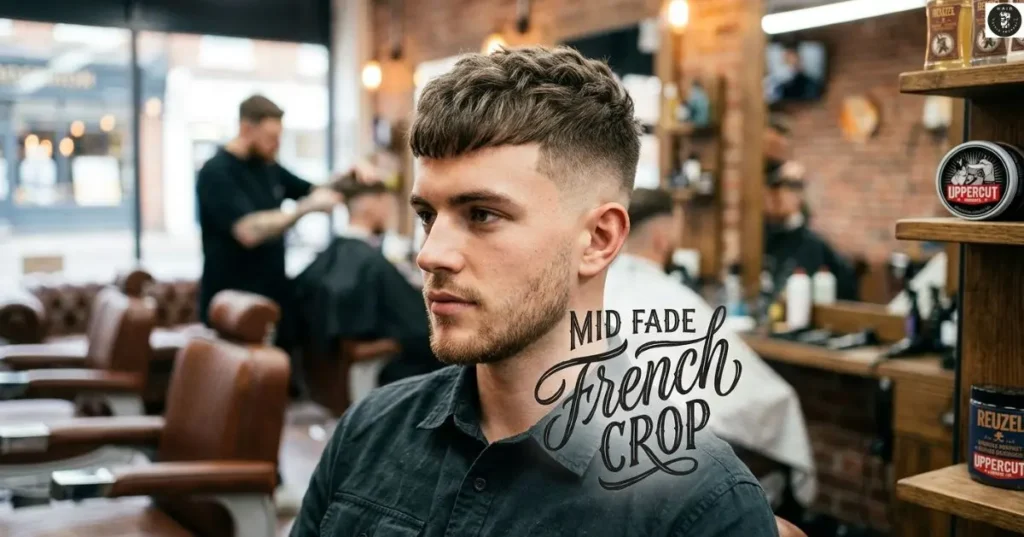
Textured, cropped fringe sits above a tight, clean fade, making this one of the most consistently requested styles among younger clients right now. The combination of movement up top and precision through the sides gives it broad appeal across a wide range of hair types.
23. Mid Fade Undercut
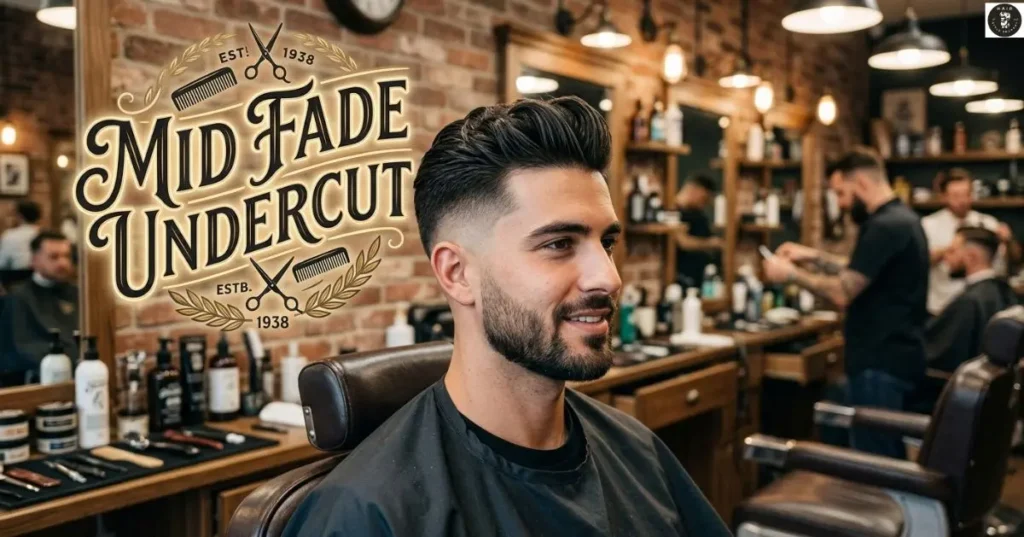
Longer hair on top, often styled backward or to the side, drops sharply into a tightly faded undercut beneath it. This creates strong contrast between the two sections and tends to suit oval, diamond, and heart-shaped faces particularly well.
24. Mid Fade V-Cut Neckline
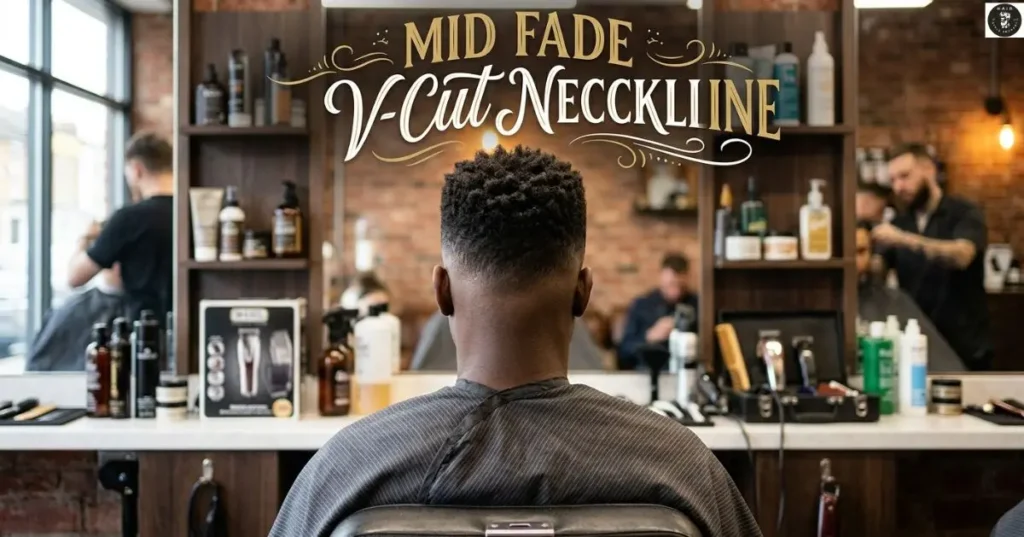
Instead of a rounded or squared-off finish at the back of the neck, the fade tapers down into a distinct V-shape, adding a small but noticeable detail that sets this version apart from a standard neckline.
25. Mid Fade Line-Up Buzz
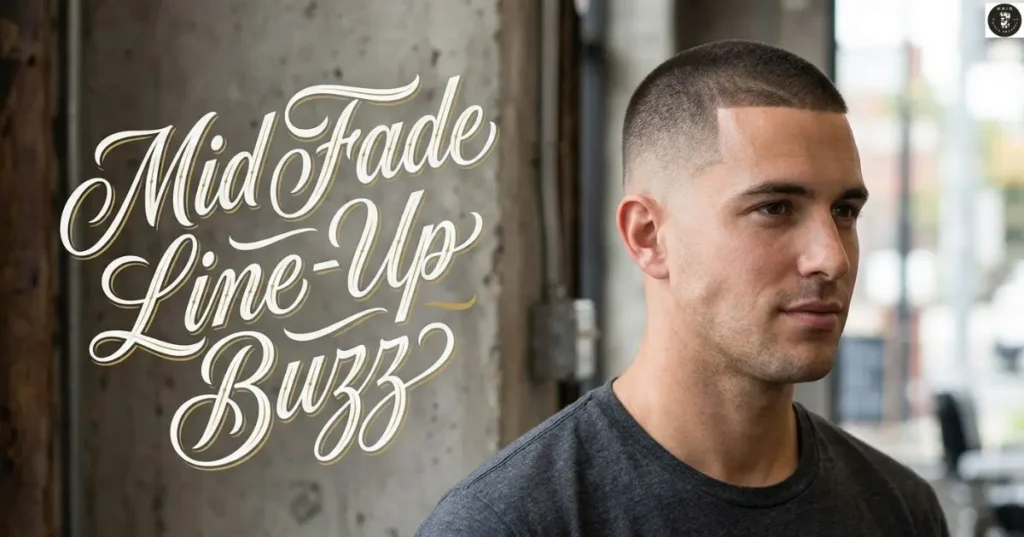
A crisp, razor-defined hairline runs along the front, adding sharp, boxed-up edges to an otherwise simple buzzed top and mid-level fade through the sides.
It’s a detail that requires more frequent barber visits to maintain, but it makes an enormous difference to how fresh the overall cut looks.
26. Mid Fade Blowout
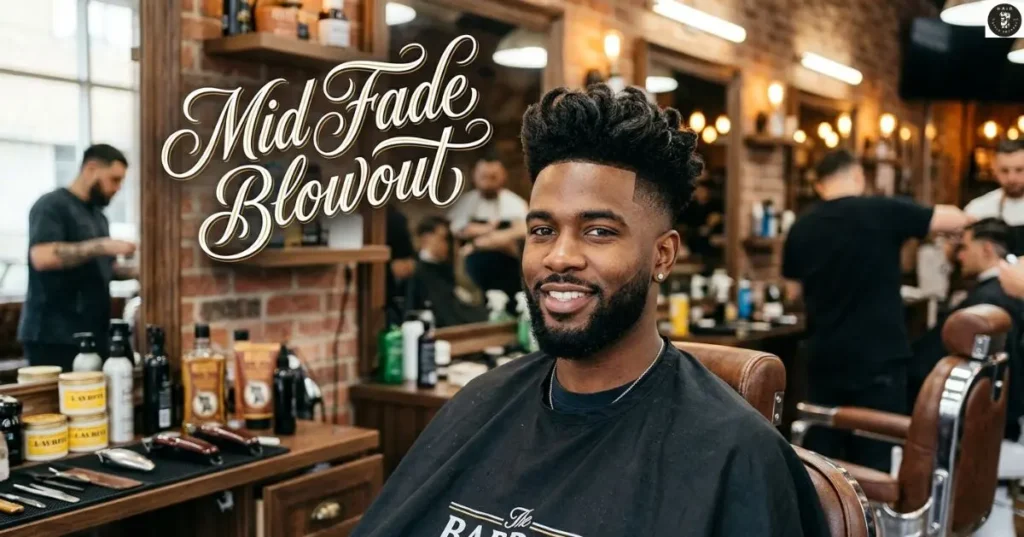
Volume is built up through the top section using a blow-dryer, creating lift and movement that contrasts against the tightly faded sides beneath it. This works especially well with naturally curly or wavy textures, where the added heat styling encourages extra bounce.
27. Mid Fade Side Part
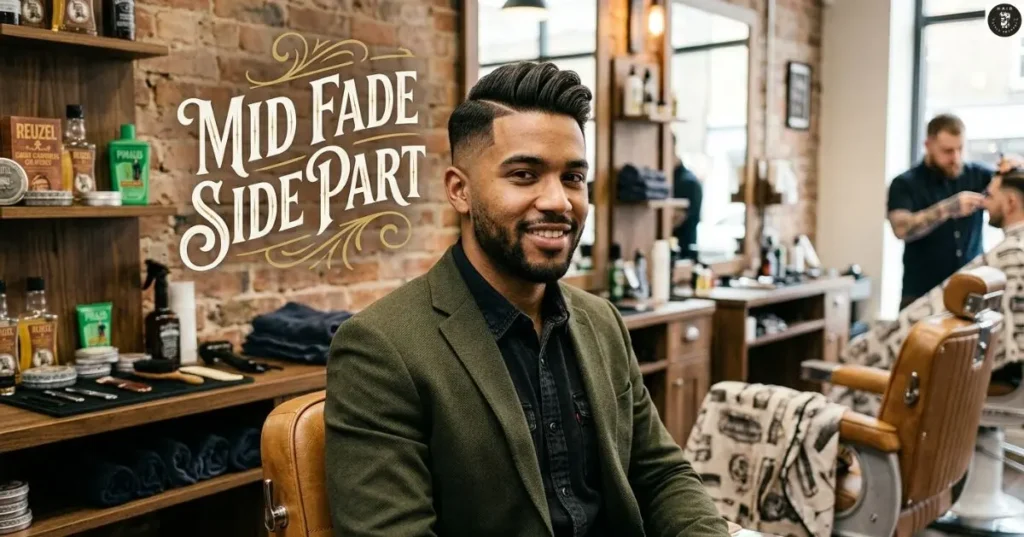
A clearly defined, combed part sits above a clean mid fade, giving the whole look a slightly dressier edge than a purely buzzed top. It’s a strong choice for guys who want something a little more styled without committing to significant length anywhere.
28. Mid Fade Fluffy Top
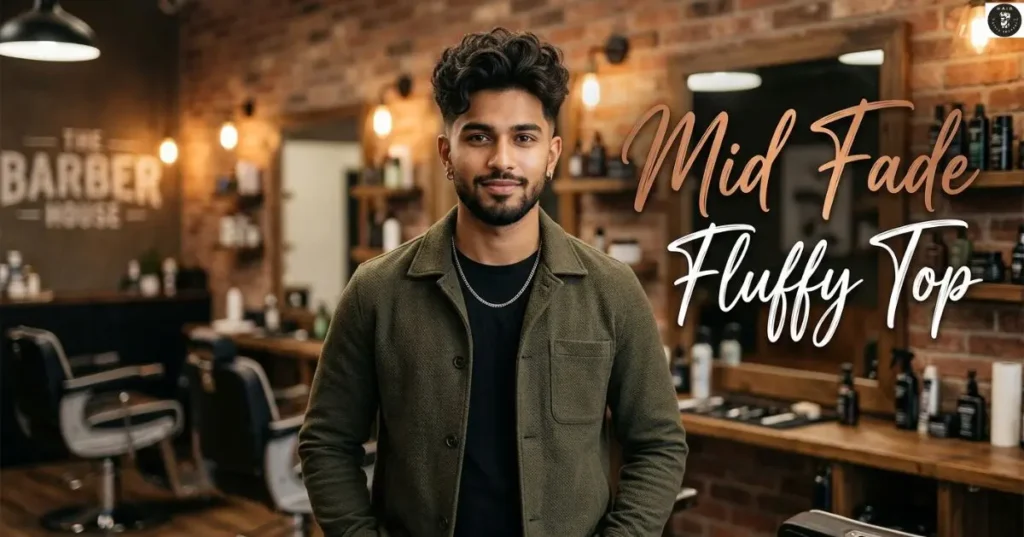
Soft, natural volume is left undisturbed on top rather than styled with heavy product, then faded cleanly through the sides. It has a relaxed, youthful quality that works particularly well for teens and guys in their early twenties.
29. Mid Fade Blonde Buzz
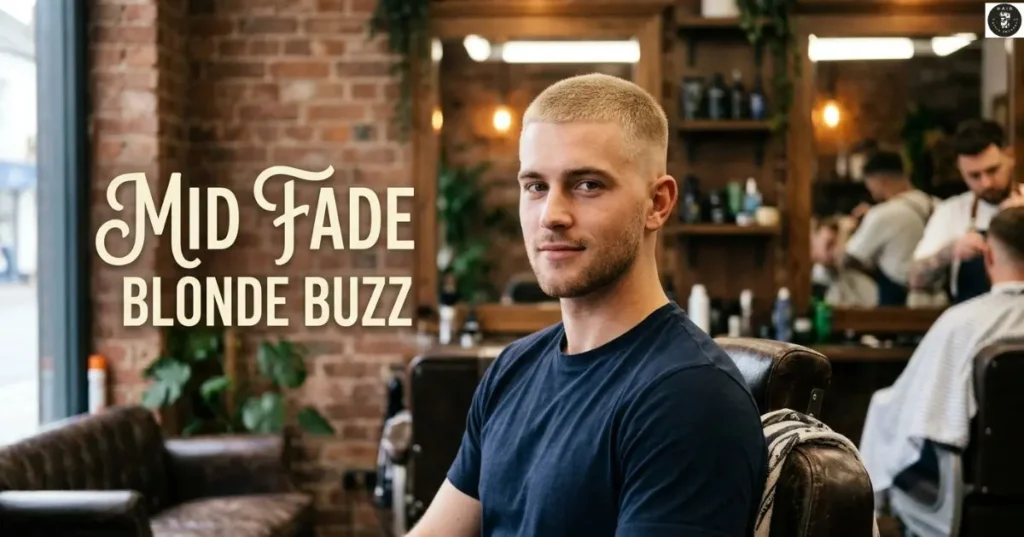
The structural elements stay the same as a standard mid fade buzz cut, but the top is lightened or bleached for extra contrast against the fade itself.
It’s a bolder, color-driven variation that draws far more attention than most of the entries on this list.
30. Mid Fade Design Cut
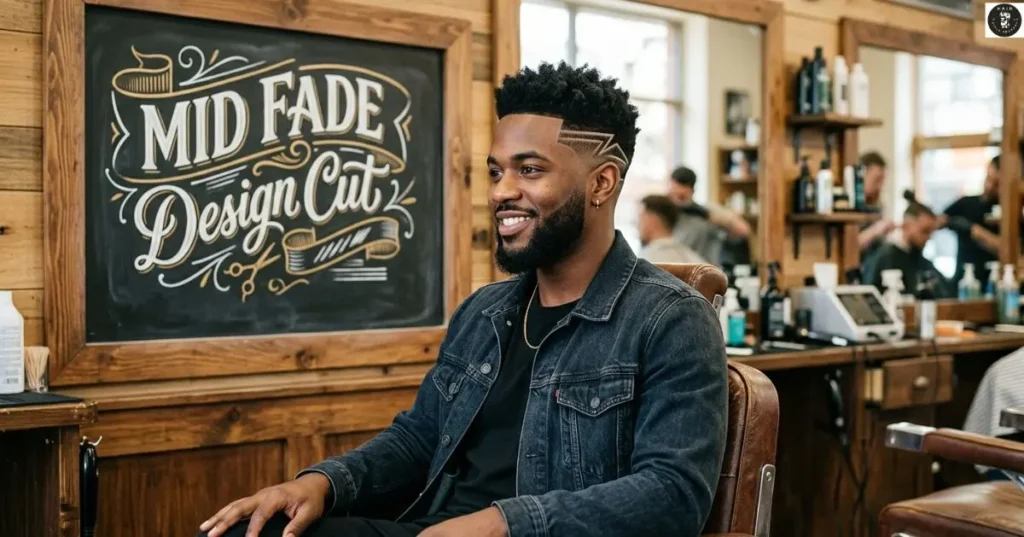
A shaved line, geometric shape, or small pattern is etched directly into the fade, turning a fairly standard haircut into something more personal and creative.
This works especially well on thicker, more textured hair, where the added line stands out clearly against the surrounding volume.
31. Mid Fade Mullet
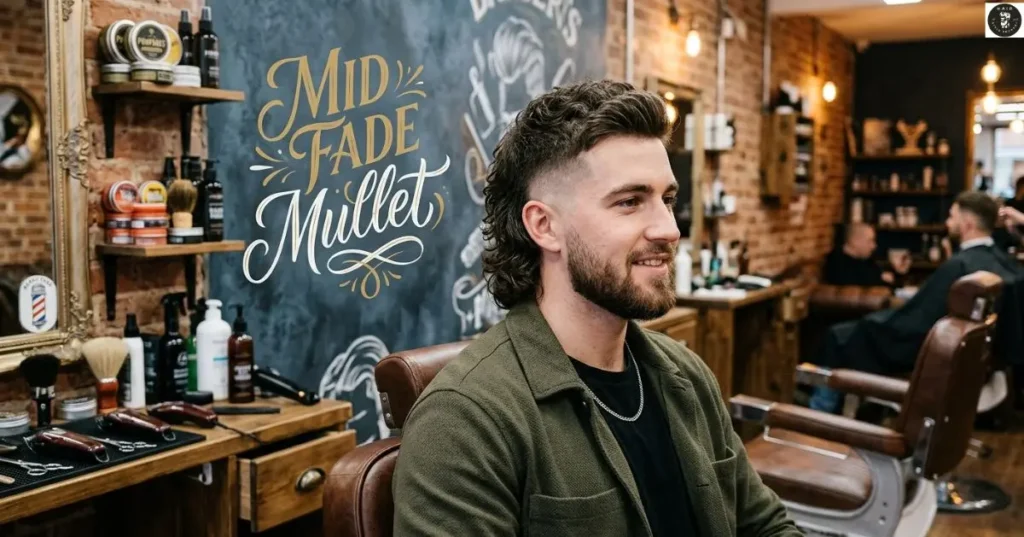
Short and tightly faded through the front and sides, but left noticeably longer at the back, this is a modern take on a genuinely old-school shape. It’s not for everyone, but among guys chasing a more rebellious, retro-leaning look, it remains a consistently popular choice.
32. Mid Fade Messy Crop
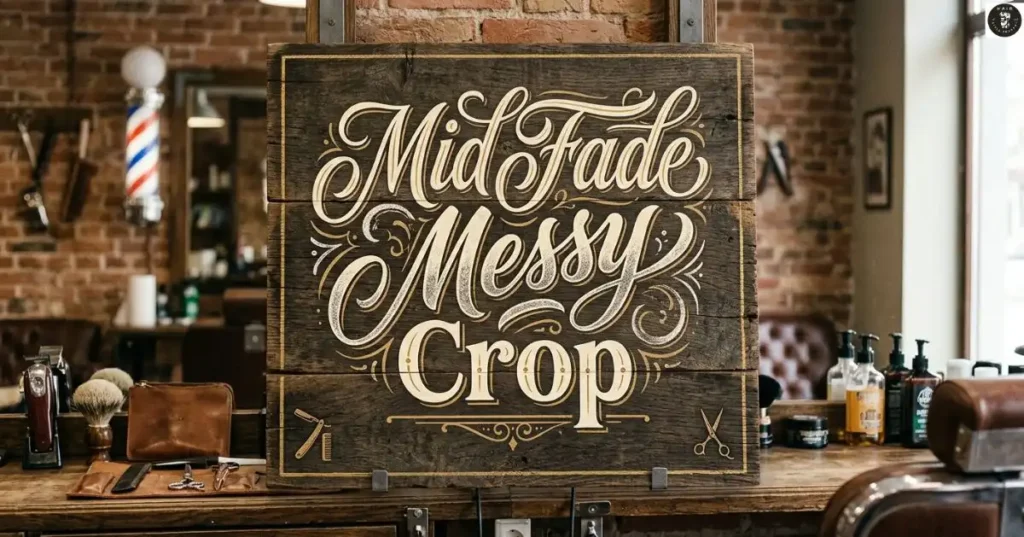
A deliberately tousled, textured top sits above a clean, precise mid fade, creating contrast between structure and looseness. It’s an easy everyday style that relies on finger-styling rather than careful blow-drying, making it one of the lowest-maintenance options on this list once the initial cut is done.
33. Mid Fade Straight Hair Buzz
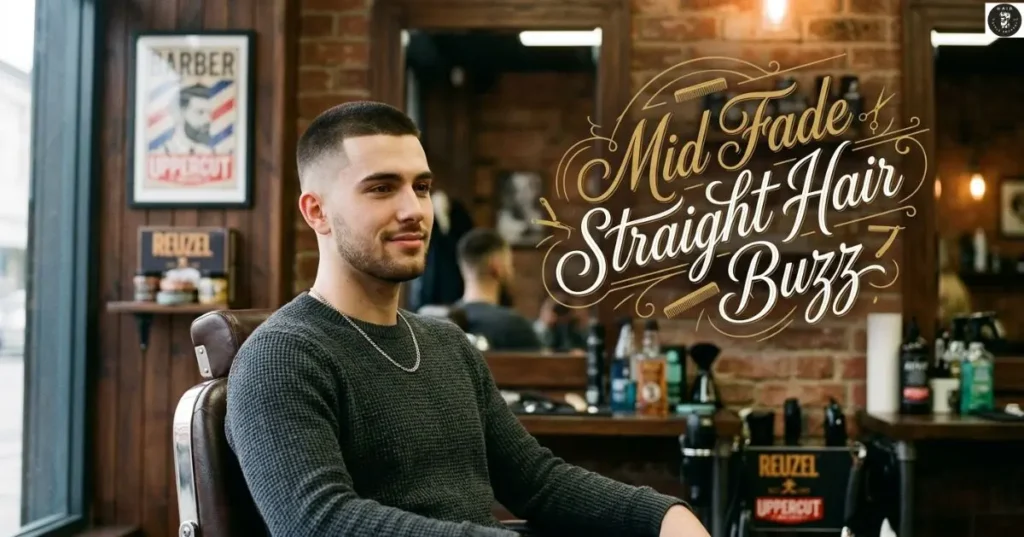
Built specifically around naturally straight hair, this version keeps the top low-volume and sleek rather than trying to force texture that straight hair naturally resists. The fade itself does most of the visual work here, since the top stays intentionally understated.
34. Mid Fade Long Top
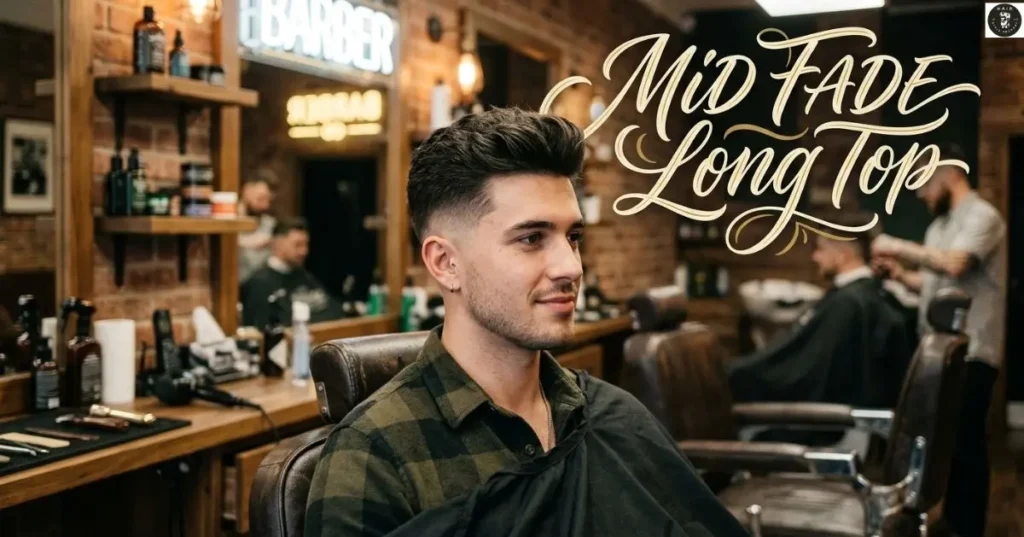
The top is left noticeably longer than a typical buzz cut, sometimes styled forward to partially cover the forehead, while the sides remain tightly faded beneath it. It adds movement and a slightly softer overall silhouette compared to most of the shorter styles on this list.
35. Military-Style Mid Fade
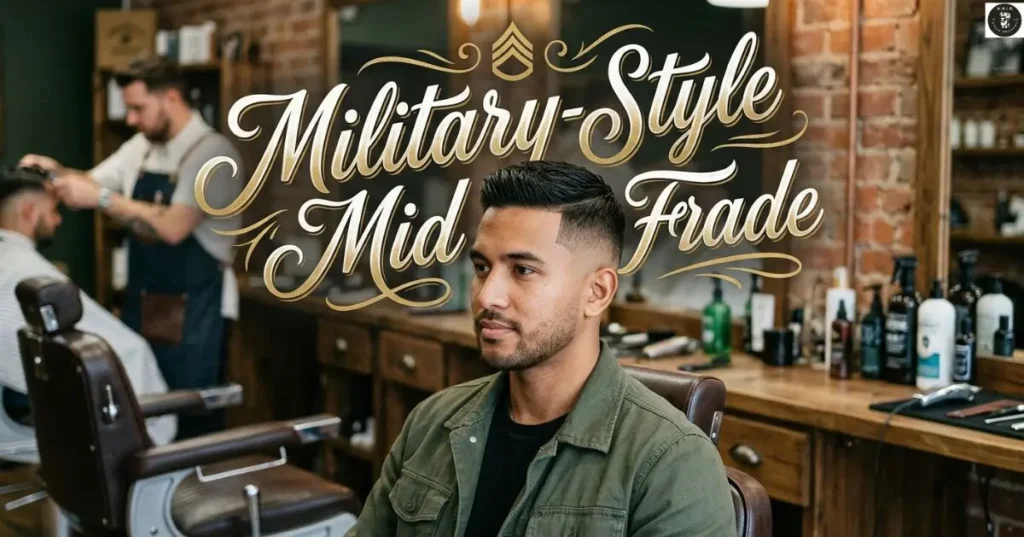
Closer to a traditional service cut than a trend-driven style, this version keeps the top ultra-short and structured, fading cleanly through the sides for a clean, tactical finish. It thrives on precision and sharp edges, and it suits active lifestyles particularly well.
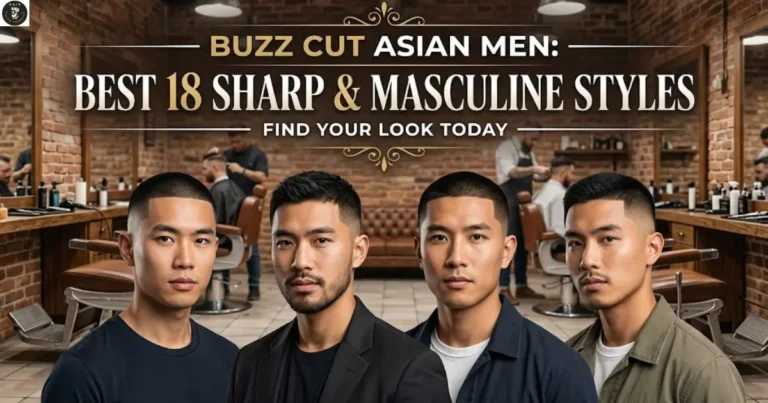
36. Mid Fade Asian Hair Style
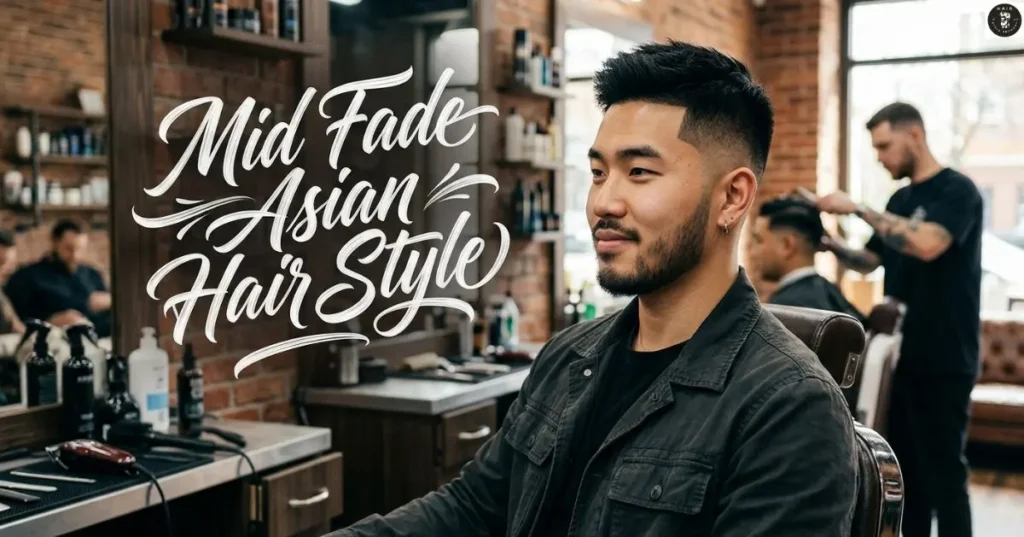
Designed with thicker, straighter hair textures in mind, this version keeps some length and light layering on top while fading the sides to reduce overall bulk. The result sits full and natural without becoming heavy or difficult to manage day-to-day.
37. Mid Fade Caesar Cut
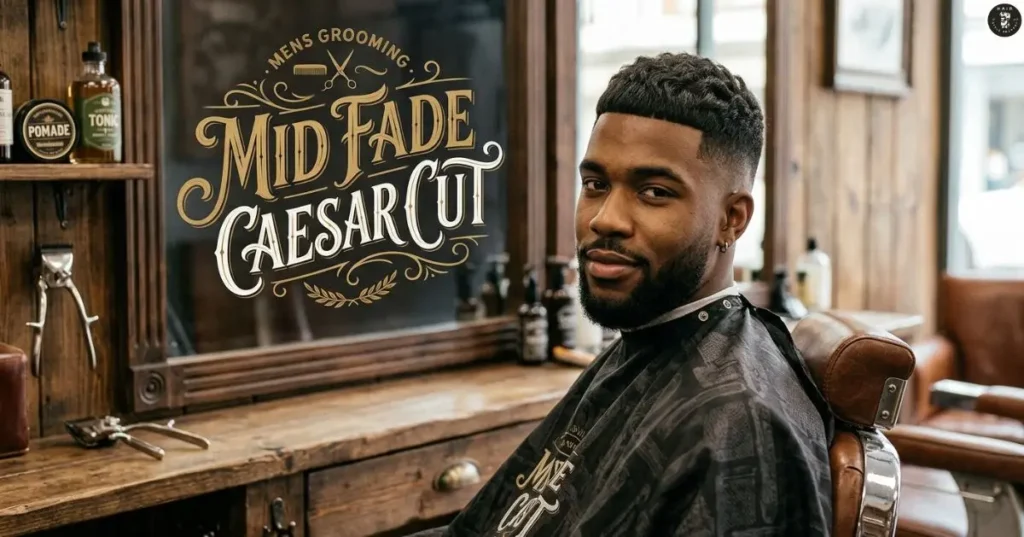
Short, even length runs across the entire top, with a light fringe styled forward, fading cleanly through the sides and back beneath it. It’s a tidy, easy-to-manage shape that works especially well for guys who want minimal daily styling.
38. Mid Fade Buzz with Hard Line-Up and Beard
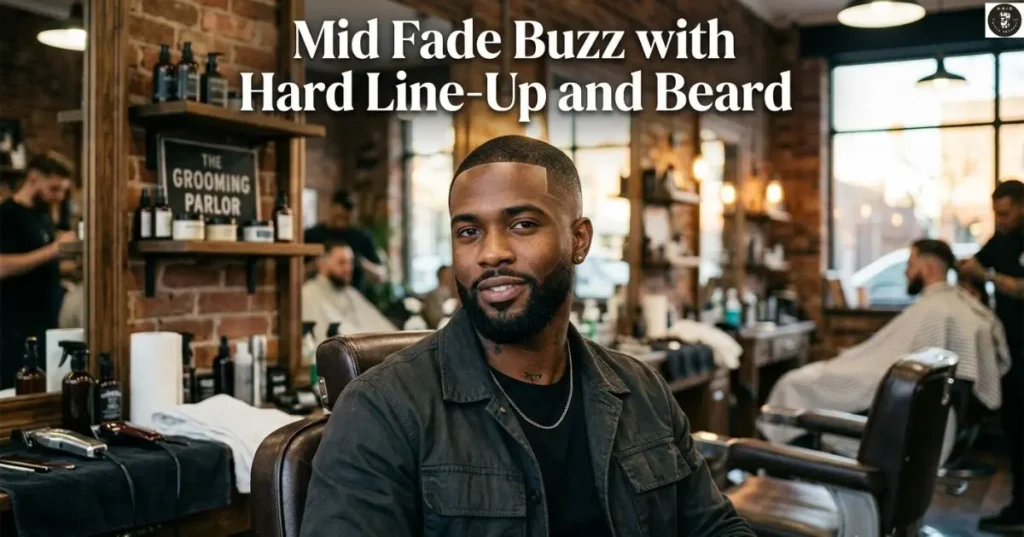
Combining a sharply defined front hairline, a tight mid-level fade, and a well-groomed beard, this version maximizes structure across the entire head and face.
It’s one of the most detail-heavy combinations on this list, and it requires the most frequent barber visits to keep every element looking fresh simultaneously.
39. Mid Fade Textured Fringe
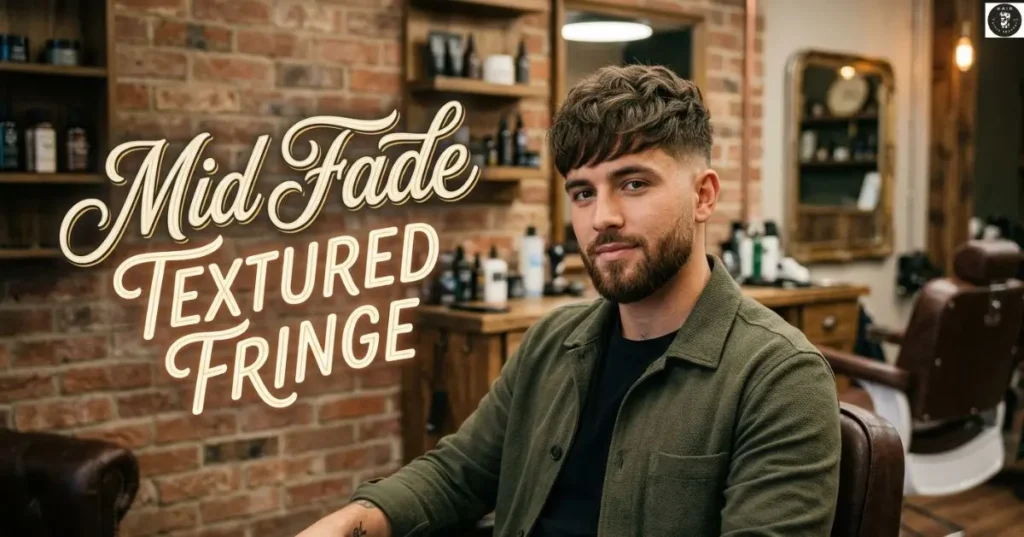
A choppier, more deliberately undone version of the standard fringe fade, this style leans into streetwear-adjacent styling trends. The forward-styled fringe adds edge and contrast against the precision of the fade beneath it.
40. Mid Fade Brush-Up
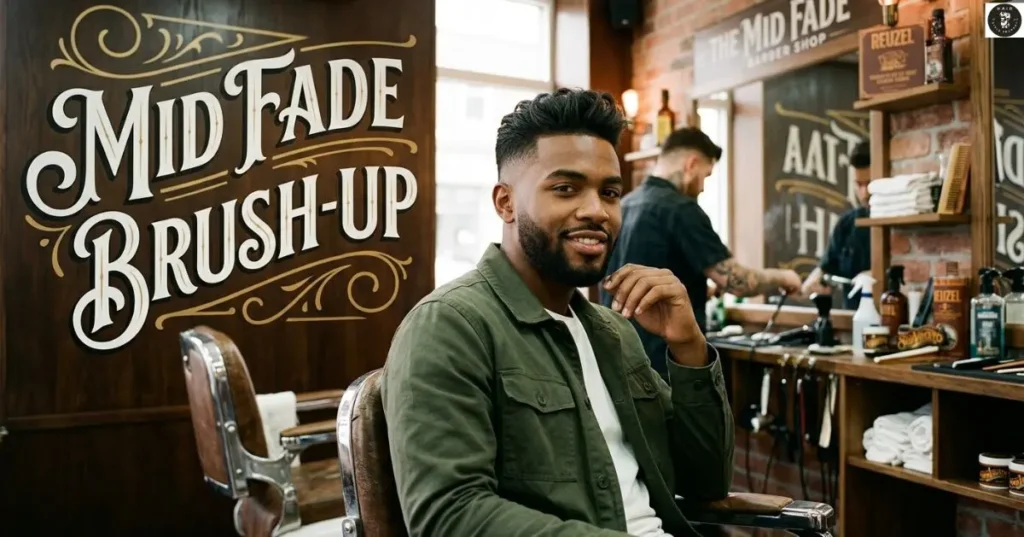
Hair on top is brushed upward and slightly forward rather than backward, creating a rounded, youthful shape that sits above the fade. It’s a subtle but effective way to add a bit of height and movement without any significant length.
41. Mid Fade Buzz Cut with Skin Line-Up
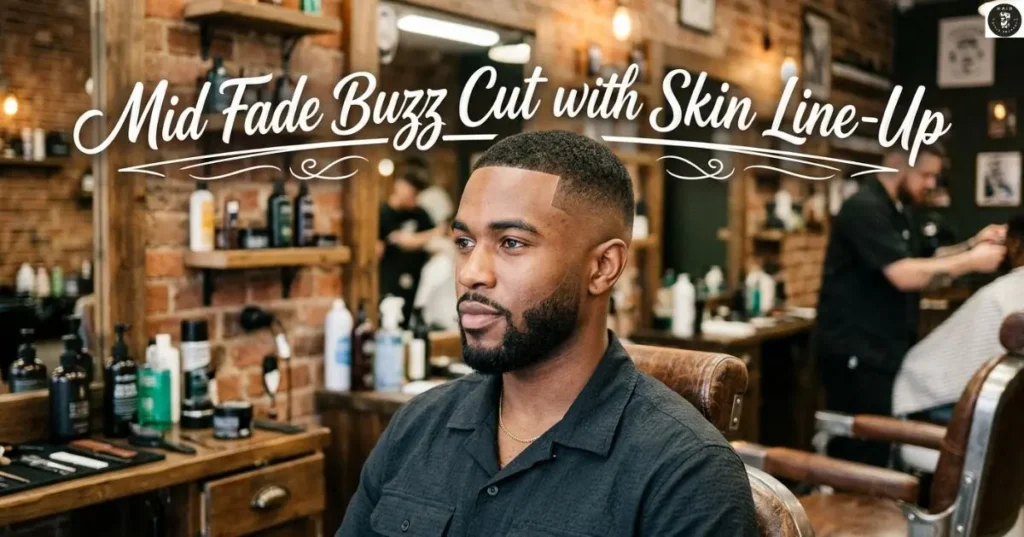
The cleanest, sharpest version on this entire list — a razor-defined hairline finishes off a tight mid fade for a look that reads as freshly cut even several days after your last barber visit.
It requires the most upkeep of any style here, but the payoff in sharpness is hard to match.
Best Products for Styling a Mid Fade Buzz Cut
Because there’s so little hair to actually work with on most versions of this cut, the right product matters far more than it would for a longer style. Here’s what tends to make the biggest difference:
Texture clay adds grip and definition to shorter tops without weighing hair down, and it’s particularly useful for styles like the classic mid fade taper or textured crop, where you want separation without heaviness.
Molding paste offers flexible, natural-looking hold that works well for fringes, quiffs, and comb-overs, giving enough control to keep a shape in place without turning stiff or hard by the end of the day.
Styling cream provides lightweight control that suits softer, more natural finishes like the fluffy top or messy crop, where you want to enhance texture rather than lock it into place.
Pomade delivers shine and stronger hold, making it the go-to choice for slicked-back or side-part variations where a polished, glossy finish matters.
Texture powder builds volume from the roots, which is especially useful for fine or thinning hair that needs a bit of extra lift and the appearance of fuller density.
Beard oil rounds out the routine for anyone pairing their fade with facial hair, keeping beard hair soft and helping the fade-to-beard blend look intentional rather than patchy.
Matching the product to the specific version of the cut you’re wearing makes a noticeable difference — a pomade built for a slick back will do very little for a messy, textured crop, and vice versa.
Maintaining a Mid Fade Buzz Cut
The trade-off for such a low-maintenance daily routine is a higher-frequency barbershop schedule.
Most mid fade buzz cuts need a touch-up every two to three weeks to keep the blend looking sharp — leave it much longer than that and you’ll start seeing the uneven, fuzzy regrowth barbers often refer to as “tennis ball” texture, particularly through the fade itself.
If you’re comfortable handling clippers yourself, a home touch-up between professional visits can stretch out the time between barbershop appointments, especially for simpler versions like the classic buzz or crew-style top.
That said, the more detailed styles on this list — anything involving a hard part, a line-up, or a design cut — are worth leaving to a professional, since clean blending and precise edges are genuinely difficult to replicate without training and the right tools.
Scalp care matters more than people expect with such short hair, too. With so little coverage, sun exposure, dryness, and irritation all become more noticeable, so a light moisturizer or scalp-specific product is worth adding to the routine, particularly during summer months.
A Short History of the Buzz Cut and the Mid Fade
To understand why the mid fade buzz cut feels so current, it helps to know where it actually came from.
The buzz cut itself traces back to military grooming standards from the mid-20th century, when running clippers uniformly over the entire head became the fastest, most practical way to keep large numbers of recruits looking neat and easy to manage.
It was efficient, low-cost, and required almost no upkeep beyond a fresh trim every couple of weeks — exactly the qualities that still make it appealing today, just for very different reasons.
The fade itself has a slightly different lineage. As barbers began experimenting with graduated blending rather than a single uniform length, the fade emerged as a way to soften the harsh, all-one-length look of a traditional buzz cut while still keeping the sides short and easy to maintain.
Through the 1980s and 1990s, fades of every height became closely associated with streetwear and hip-hop culture, turning what had once been a purely practical military cut into something with genuine style credibility.
The mid fade, positioned right between the subtlety of a low fade and the drama of a high fade, eventually became the default choice for guys who wanted contrast without going to extremes.
By the 2020s, the combination of a buzzed top and a mid-level fade had settled into its current role: a genuinely universal cut that works in professional settings, casual settings, gyms, and barbershops alike, without requiring guys to pick a side between “sharp” and “low-maintenance.”
Buzz Cut and Fade Terminology You’ll Actually Hear at the Barbershop
Walking into a barbershop with the right vocabulary makes the entire experience smoother, and it helps avoid the kind of miscommunication that leads to a haircut you didn’t actually want.
Blend point refers to the exact spot on your head where the shorter sides transition into the longer top — this is the detail that separates a low fade from a mid fade from a high fade.
Nape is the back of the neck, where your hairline naturally curves; this is where the neckline detail (rounded, squared, or V-shaped) gets finished off.
Sideburns are the strips of hair running down in front of the ears; how these are tapered or blended affects how the entire fade reads from the side profile.
Hairline refers to the natural edge where your hair growth begins across the forehead and temples — barbers use this as the anchor point for any line-up or hard part detail.
Scalp visibility describes how much skin shows through the shortest sections of hair; more visibility means more contrast, which is the entire point of a skin fade.
Hair density is simply how many hair strands you have per square inch of scalp, and it plays a major role in which guard lengths and styles will look full versus sparse on your particular head.
Line-up (also called an edge-up) refers to the sharp, defined outline cut into the front hairline using clippers or a razor, and it’s the finishing detail that makes a fresh cut look genuinely crisp rather than merely short.
Knowing these terms means you can describe exactly what you want rather than relying entirely on a reference photo, which is especially useful if your regular barber is unavailable and you end up in a different chair.
Styling Routines by Hair Length and Type
Even though a mid fade buzz cut is about as low-maintenance as haircuts get, the top section still benefits from a quick, deliberate styling routine depending on how much length you’ve kept.
For a fully buzzed top (guard #1–#2): There’s genuinely nothing to style here beyond a rinse. A small amount of a lightweight moisturizing product can help keep the scalp comfortable, especially if you’re prone to dryness, but daily styling isn’t really part of the equation at this length.
For a short buzzed top with texture (guard #3–#4): A pea-sized amount of texture clay or matte cream, worked through slightly damp hair with your fingertips, is usually enough to add definition without looking overdone. Focus product application at the front and crown rather than smoothing it evenly across the entire head.
For a longer top styled with movement (quiffs, blowouts, textured crops): Start with damp hair, use a blow-dryer on a medium heat setting to lift the roots in the direction you want the style to fall, then finish with a small amount of molding paste or styling cream to lock the shape in place once the hair has cooled.
For curly or coily textures left natural: A curl-defining cream applied to damp hair, followed by air-drying or gentle diffusing, keeps natural curl pattern looking intentional rather than frizzy. Avoid brushing curly or coily hair once it’s dry, since this tends to break up the curl pattern and create unwanted volume.
For slicked-back or side-part styles: Apply pomade to damp hair, comb the section into place while it’s still wet, and allow it to dry naturally or with light heat rather than aggressive blow-drying, which can disrupt the sleekness you’re going for.
Alternative Hairstyles Worth Considering
If you’ve read through all 41 versions above and none of them feel quite right, it might be worth stepping outside the buzz cut and fade family entirely.
A handful of related men’s hairstyles share some of the same low-maintenance appeal while offering a slightly different overall shape:
- Curly hairstyles for men that lean into natural texture rather than fighting it.
- Slicked-back hairstyles for a more formal, polished alternative.
- Bowl cuts for a retro-inspired, fringe-forward look.
- Mullets for guys who want more length and personality at the back.
- Pompadours and quiffs for added height without a full fade underneath.
- Faux hawks for a style that sits between a mohawk and a standard fade.
None of these require abandoning the idea of a fade entirely — many can still be paired with a mid-level blend through the sides — but they shift the focus away from a fully buzzed top toward something with a bit more length and shape.
My Final Thoughts:
Few haircuts manage to be this flattering across so many face shapes and hair types while asking so little of you on a daily basis.
Whether you land on the simplicity of a classic mid fade buzz cut, the added structure of a hard part, or the personality of a design cut or mohawk, there’s a version among these 41 that fits both your features and your lifestyle.
Bring a photo to your next barber appointment, be specific about where you want the blend to start, and you’ll walk out with a cut that stays sharp for weeks, not days.
FAQs
What face shape is best for a mid fade buzz cut?
Most face shapes handle this style well, but oval, diamond, and square faces tend to benefit the most, since the short length and defined blend show off cheekbones and jawlines clearly.
What guard number should I ask for?
It depends on how bold you want the finish to be. A triple zero to #1 on the sides gives maximum contrast, while the top usually sits somewhere between a #2 and #4 depending on how much length you want to keep and style.
Is a mid fade buzz cut good for thinning hair?
In many cases, yes — shorter hair reduces the visual contrast between denser and thinner areas, which can actually make overall coverage look more even.
Can I maintain a mid fade buzz cut at home?
Simple, uniform sections are reasonably manageable with a home clipper set, but clean fades, precise line-ups, and hard parts are genuinely difficult to replicate without training.
How is a mid fade different from a taper?
A fade drops all the way to bare skin at some point along its length, creating sharp, high-contrast blending. A taper simply shortens gradually without ever fully disappearing, leaving your natural hairline visible throughout.

I’m M Ahmad Ansari, founder and content creator at HairstyleJournal. With 3+ years of experience researching hairstyles, haircuts, and men’s grooming, I create practical, easy-to-understand content to help readers choose, style, and maintain the right haircut with confidence.
2 Comments