Mullet Buzz: 25+ Best Trendy Styles You’ll Want to Try
There’s a reason barbershops everywhere keep hearing the same request lately: short on the sides, longer in the back, and something that actually has personality to it. That’s the Mullet Buzz taking over in 2026, and it’s not the stiff, one-note haircut people remember from decades ago.
Today’s Mullet Buzz haircut for men is flexible. It bends toward fades, waves, curls, shaggy texture, or clean structure depending on who’s wearing it, and that’s exactly why it’s stuck around long enough to become a real trend instead of a passing joke.
This guide is built to be the only resource you need before your next barber appointment.
We’ll go through the history behind the comeback, more than 25 mullet styles worth trying, the products that keep the shape looking sharp, a full step-by-step styling routine, a breakdown of which face shapes and hair types suit a mullet best.
A long list of frequently asked questions that cover pretty much everything people search before committing to the cut.
Also Read: Bleach Buzz Designs: 10+Best Bold & Trendy Hair Ideas
A Quick History Behind the Mullet Buzz
The mullet haircut has been around for decades, tied to musicians, athletes, and rebels who wanted a look that stood out.
It fell out of fashion for a long stretch, mostly because the traditional mullet leaned heavily on sharp contrast without much nuance — short front and sides, dramatically longer back, and not a lot of blending in between.
What’s different now is technique. Barbers have gotten far better at texturizing, fading, and layering, which means the same basic shape — short front and sides, longer hair in the back — can look completely different depending on how it’s cut and styled.
That’s the foundation of the modern mullet, and it’s a big part of why the style feels fresh again instead of dated.
Also Read: Buzz Cut Blond: Best Styles, Ideas & Hair Care Tips 2026
Why the Mullet Buzz Is Taking Over in 2026
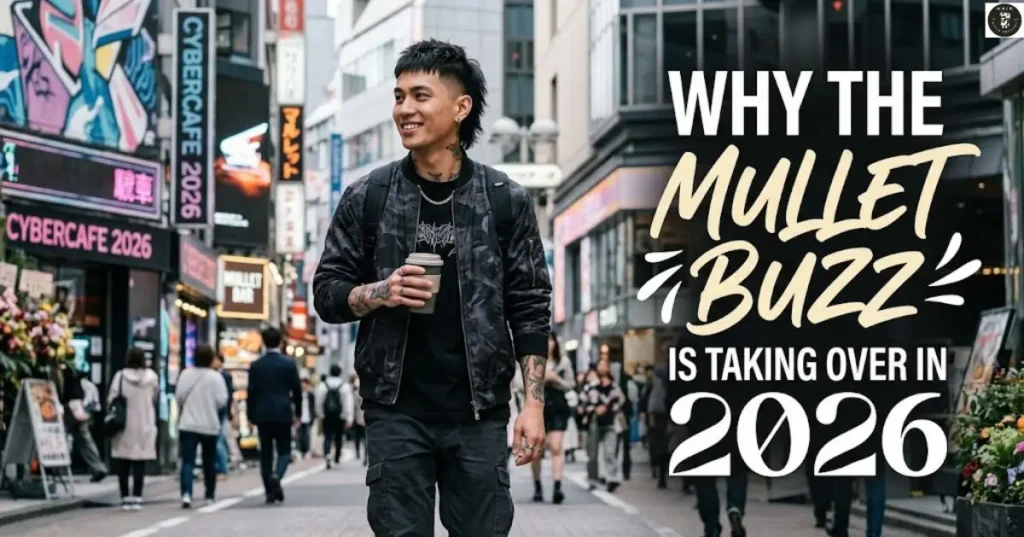
A few things are driving this comeback, and none of them are random.
First, there’s the shift toward individuality in men’s grooming generally. Gen Z likes mullets because the haircut represents individuality, self-expression, and style versatility.
It’s a bold yet playful look that stands out confidently without going full costume-level extreme. It says “I did something different” without requiring a total identity overhaul.
Second, the modern Mullet Buzz is genuinely more wearable than the traditional version.
A modern mullet combines the classic short-front, long-back shape with fades, texture, or layers, giving a more stylish, versatile, and trendy version that works in more settings — school, work, weekends, everywhere.
Third, social media keeps feeding the trend. Every time a public figure or athlete shows up with a fresh mullet variation, search interest spikes and barbers start fielding requests for that exact look.
Combine that with better technique and more product options built specifically for texture and volume, and you get a trend with real staying power heading into 2026.
Also Read: Buzz Cut Long Hair 2026: How to Grow It Out & Style It
Mullet vs. Wolf Cut: Clearing Up the Confusion
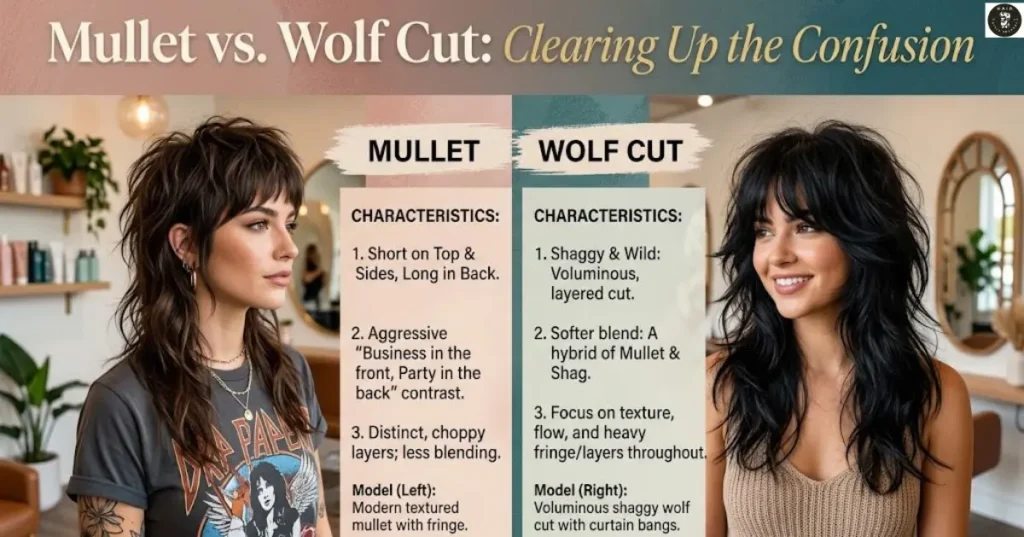
Before diving into styles, it’s worth settling a common mix-up. A mullet keeps the sides short and the back long, with a clear distinction between the two zones.
A wolf cut uses heavy layers all over the head, creating a messier, more blended look with volume concentrated on top rather than a hard line between short and long sections.
Some of the hybrid styles further down this list borrow from both, which is part of why people get confused. But as a baseline: mullet equals contrast, wolf cut equals blend.
25+ Mullet Buzz Styles Worth Trying
Here’s the full breakdown, organized by category so you can find the version that fits your hair texture, face shape, and lifestyle.
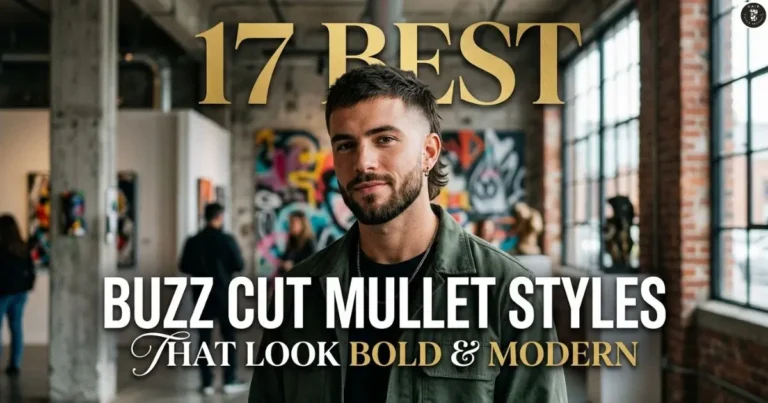
Also Read: 17 Best Buzz Cut Mullet Styles That Look Bold & Modern
Classic and Traditional Cuts
1. Traditional Mullet: The original shape. Short front, noticeably longer back, sharp contrast, no blending softening the edges.
This is the version people picture when they hear the word “mullet,” and it still has a loyal following among guys who want maximum contrast without any modern softening.
2. Classic Mullet: A slightly cleaned-up cousin of the traditional cut, this version keeps the same short-long structure but with more even lines and a bit more grooming polish. It works well for guys who like the retro shape but want something that still looks intentional rather than accidental.
3. Business Mullet: This is the mullet’s answer to office dress codes. The front and sides stay tidy and professional, while the length in back is kept just long enough to feel a little rebellious without crossing into “too much for the office” territory.
4. Short Mullet: For guys easing into the trend, a short mullet keeps the back length modest. You get the shape and the statement without the multi-month growing process the longer versions require.
5. Long Mullet: The opposite approach — this is for guys who’ve been patient, letting the back grow for months to get serious length. It’s dramatic, striking, and works especially well with wavy or curly texture that adds body to the length.
Also Read: Buzz Cut Taper: 15 Styles That Look Seriously Clean
Modern and Textured Mullet Buzz Haircut Styles
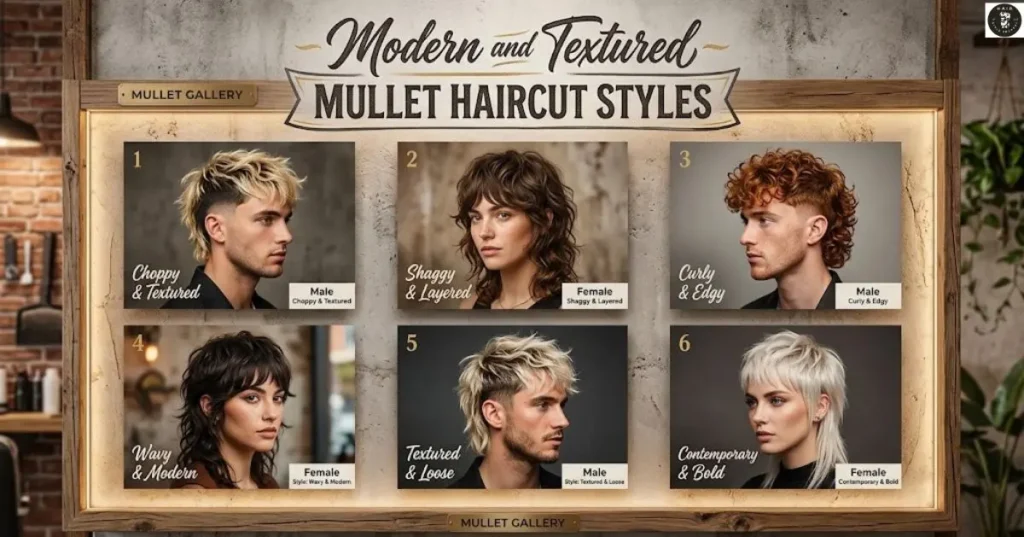
6. Modern Mullet: The most requested version in barbershops right now. It blends fades on the sides with textured, layered length on top and in back, striking a balance between the traditional shape and something that reads as current and stylish.
7. Textured Mullet: Choppy, piece-y layers cut through the length to add movement. This version photographs incredibly well because the texture catches light and shadow differently than a flat, uniform length would.
8. Layered Mullet: Instead of one solid length in the back, this style uses layers throughout to soften the classic hard contrast. It’s a good middle ground for guys who like the mullet concept but aren’t ready for a dramatic short-to-long jump.
9. Shaggy Mullet: Loose, undone, barely-styled — the shaggy mullet is about as low-maintenance as this haircut gets. A quick scrunch of product and you’re done. It suits guys with natural wave or texture particularly well.
10. Feathered Mullet: A slightly retro touch, this version uses feathered ends for softness. It’s less sharp than a textured cut and works nicely for guys wanting a gentler transition between the shorter and longer sections.
Also Read: 41 Mid Fade Buzz Cut Styles That Look Sharp in 2026
Fade Mullet Buzz Variations
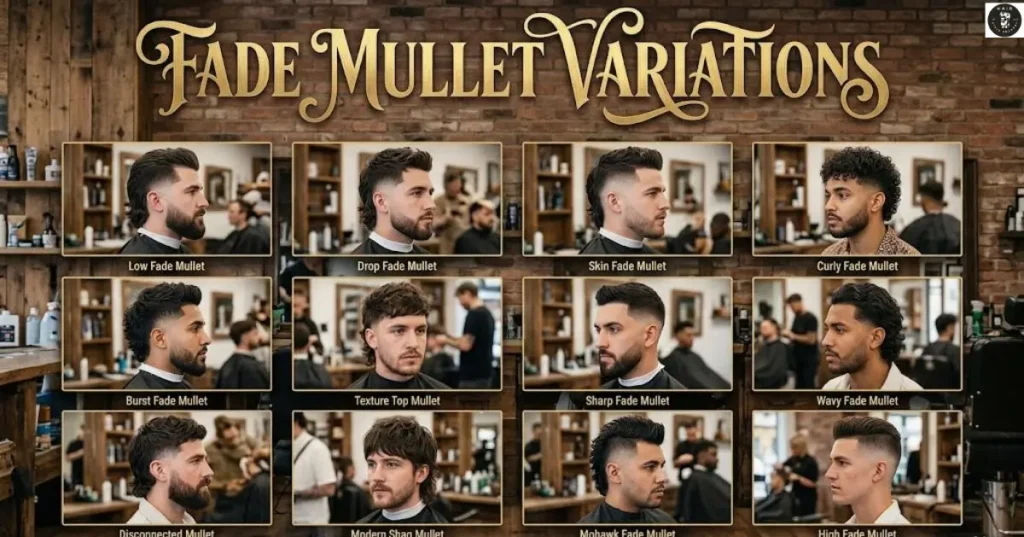
11. Faded Mullet: Sides fade down to the skin while the back stays long, creating high contrast in a clean, barbershop-precise way. This is one of the most popular combinations right now because it looks sharp from every angle.
12. Skin Fade Mullet: The most extreme fade option, taking the sides all the way to bare skin. Paired with a longer back, the contrast is dramatic and unmistakably modern.
13. Taper Fade Mullet: A gentler alternative to the skin fade, tapering gradually instead of cutting all the way down. This version suits guys who want less drama on the sides while keeping a defined shape.
14. Burst Fade Mullet: The fade curves around the ear in a rounded shape, blending smoothly into the length behind it. It’s a favorite among guys who want their fade to feel integrated rather than like a hard line.
15. High Fade Mullet: More skin shows on the sides here, pushing the fade higher up the head. The result is more contrast between the shaved sides and the long back, making the mullet shape read even more clearly.
Curly and Wavy Mullet Buzz
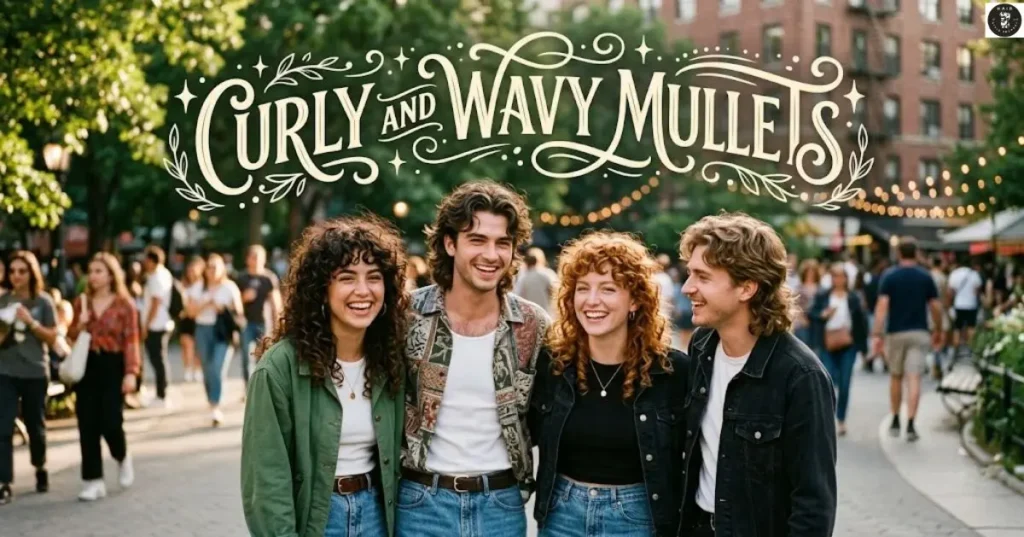
16. Curly Mullet: Natural curls add volume and texture on their own, making the back of the haircut look fuller and the overall style bolder and more modern without any extra styling effort. This is one of the best-suited textures for the mullet shape.
17. Wavy Mullet: Waves bring movement that straight hair can’t replicate, giving the length in back a relaxed, effortless quality. It pairs especially well with sea salt spray for enhanced texture.
18. Permed Mullet: For guys with naturally straight hair who want the curly volume without waiting on genetics, a perm can recreate that fuller, bouncier look through the back section.
19. Afro Mullet: Big volume on top paired with longer coils in back creates one of the boldest versions on this list. It stands out from every angle and makes a serious style statement.
Hybrid and Statement Styles
20. Wolf Cut: Technically its own category, but close enough to a mullet that the two get requested together constantly. Heavy layers all over create a messier, blended shape with volume concentrated on top, differing from the mullet’s clean short-long split.
21. Mohawk-Inspired Mullet: A strip of extra length runs down the center of the head with shorter sides, creating a more dramatic, statement-heavy variation than a standard mullet.
22. Rocker Mullet: Pulling inspiration from decades of musicians, this version goes longer and messier for maximum attitude. It’s less about precision and more about raw energy.
23. French Crop Mullet: A textured fringe up front is paired with classic mullet length in back, blending two popular trends into one cohesive look.
24. Undercut Mullet: A hard, shaved undercut on the sides contrasts sharply against dramatic length left on top and in back. This is one of the boldest fade-adjacent options on the list.
25. Curtain Mullet: Center-parted pieces frame the face at the front while mullet length trails behind. It’s a nice combination for guys who like the curtains trend but want mullet-style length in back too.
26. Bleached or Colored Mullet: Any of the styles above can be taken a step further with color. Bleaching or dyeing the length makes the shape pop even more and adds another layer of individuality to the cut.
Mullet Styling Products: What Actually Works
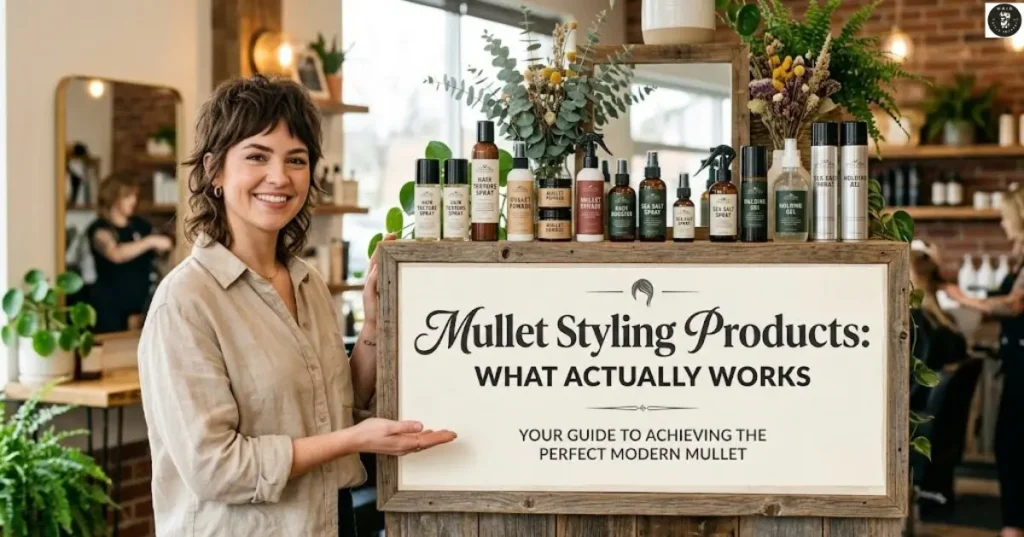
A great mullet haircut only stays great if it’s maintained properly between visits to the barber. These five products cover pretty much everything you need.
Sea Salt Spray
Sea salt spray boosts volume, enhances tousled waves, and adds effortless texture, giving mullet styles a relaxed, casual finish with natural fullness and movement.
It’s especially good for wavy and curly mullets, where you want to enhance what’s already there instead of flattening it out. Spray it into damp hair and scrunch, or mist it onto dry hair for a quick texture refresh.
Texture Powder
Texture powder adds instant lift, grip, and volume at the roots, keeping mullet hair full, structured, and lightweight for long-lasting shape and style.
This is the product to reach for when your hair looks flat at the crown or when you need styling that holds up through a long day without feeling stiff or heavy.
Hydrating Argan Oil
Hydrating argan oil nourishes mullet hair, reduces frizz, and adds healthy shine, keeping the style soft, manageable, and strong without heavy buildup. A small amount worked through the ends — especially on the longer back section — keeps things looking polished instead of dry or brittle.
Clarifying Shampoo
Clarifying shampoo removes product buildup, refreshes the scalp, and keeps mullet hair lightweight, clean, and ready for effortless styling with sharper, longer-lasting results.
Using this once or twice a week, depending on how much product you use daily, keeps your styling products working the way they’re supposed to instead of sitting on top of built-up residue.
Hydrating Conditioner
Hydrating conditioner restores moisture, strengthens hair, and prevents dryness, keeping mullet hairstyles smooth, soft, and manageable while ensuring long-term health and style retention.
Longer hair in the back is more prone to dryness and split ends, so this step matters more for mullets than it does for shorter, uniform cuts.
How to Style a Mullet: Step-by-Step Routine
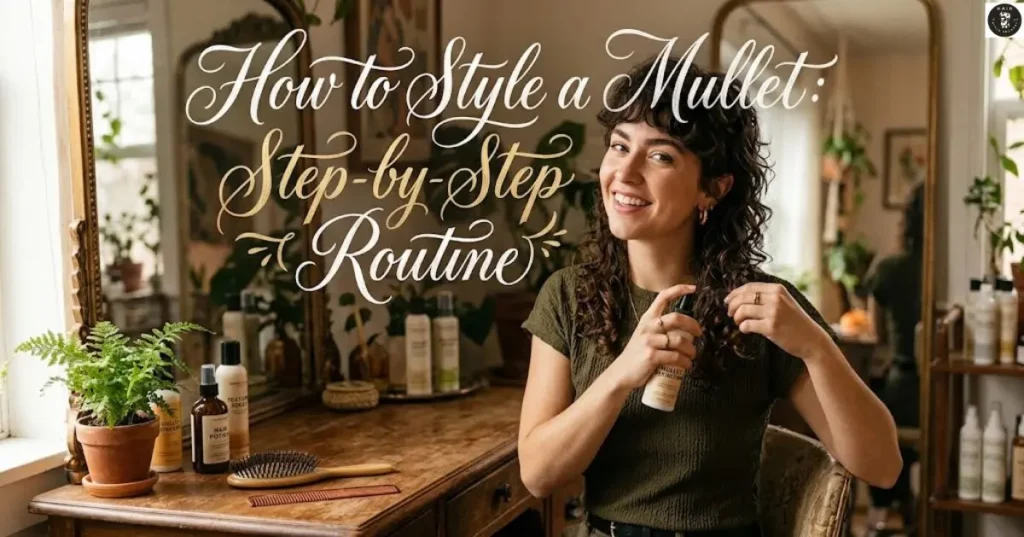
Step 1: Start with damp hair. Towel-dry until your hair is damp, not soaking wet. Product distributes more evenly and styling holds better when you start from this point rather than fully wet or fully dry hair.
Step 2: Blow-dry with volume in mind. Use a round brush and blow-dry with the airflow directed at the roots. This builds the lift that keeps a mullet from looking flat, especially on top and at the crown.
Step 3: Apply texture powder at the roots. Work a small amount of texture powder into the roots for grip and lift. This step matters most for guys with fine or straight hair that tends to fall flat throughout the day.
Step 4: Add clay or cream through the mid-lengths. Depending on whether you want a matte finish or a bit of shine, apply clay or cream through the middle and ends of the hair. This is where most of the actual shaping happens.
Step 5: Shape with your fingers, not a comb. Combing tends to flatten texture and make the style look overly polished in a way that works against the mullet’s natural, undone character. Fingers give you more control over individual pieces and layers.
Step 6: Finish with sea salt spray if you want extra texture. A light mist adds a beachy, tousled finish, especially useful for wavy and curly mullets that benefit from enhanced natural movement.
Step 7: Seal with a touch of argan oil. Just a drop or two rubbed between your palms and smoothed over the ends controls frizz and adds shine without weighing the style down.
Styling Tips by Hair Type
- Straight hair: Lean on texture powder and a light hold cream to fake the volume and separation that curls provide naturally.
- Wavy hair: Sea salt spray is your best friend here — it enhances what’s already happening without much extra effort.
- Curly hair: Scrunch product in rather than brushing it through, which protects the curl pattern and prevents frizz.
- Coily or afro-textured hair: Focus on hydrating products like argan oil to keep the coils defined and moisturized, since this hair type dries out fastest.
Which Face Shape Suits a Mullet?
Mullets suit oval, square, and heart-shaped faces particularly well, as the layers and length balance proportions while enhancing sharper jawlines and unique facial structure.
- Oval faces can handle almost any mullet variation since the proportions are already balanced — this is the easiest starting point if you’re unsure which style to pick.
- Square faces benefit from the softer, layered versions, since the added texture around the jaw balances out strong angles.
- Heart-shaped faces do well with mullets that add width and volume toward the bottom, balancing a narrower chin against a broader forehead.
- Round faces can still wear a mullet successfully by opting for versions with more height at the crown and less width on the sides, which helps elongate the overall look.
Mullets for Every Hair Type
One of the best things about the current mullet trend is how adaptable it is.
You can get a mullet with curly hair, straight hair, or wavy hair — natural curls add volume and texture, making the back look fuller and the style more bold and modern, while straight hair offers a cleaner, more graphic version of the same shape.
A mullet suits confident men of any age with straight, wavy, or curly hair, especially those wanting a bold, low-maintenance, and trendy haircut.
Age isn’t really a limiting factor here — it’s more about attitude and willingness to commit to a style that stands out a little.
Maintenance: Keeping Your Mullet Looking Sharp
Trim a mullet every four to six weeks to maintain shape, clean sides, and balanced length, ensuring the hairstyle stays fresh, stylish, and manageable.
Skipping trims for too long tends to blur the contrast that makes a mullet look intentional rather than like hair that’s simply grown out unevenly.
Beyond regular trims, a solid weekly routine matters:
- Wash with a clarifying shampoo once or twice a week to prevent buildup from clay, cream, or salt spray.
- Follow every wash with a hydrating conditioner to keep the longer back section from drying out or splitting.
- Apply argan oil to the ends a few times a week, especially if you live somewhere dry or use heat styling often.
- Reserve texture powder and clay for styling days rather than applying daily if you’re not washing daily, to avoid excess buildup.
How to Ask Your Barber for a Modern Mullet
Ask your barber for short front and sides, longer back, and optional fades or textured layers. Show a reference photo for accuracy, since “mullet” can mean very different things depending on who you’re talking to. Be specific about:
- How dramatic you want the contrast between the short and long sections to be.
- Whether you want a fade, and if so, how high and how sharp.
- How much texture or layering you want through the length.
- Your current hair type, since curly and straight hair often need slightly different cutting approaches to achieve the same finished look.
My Final Thoughts:
The mullet has officially outgrown its old reputation. What started as a single, sharply contrasted shape has branched into dozens of variations — faded, curly, shaggy, mohawk-inspired, business-appropriate, and everything in between.
That range is exactly why the current Mullet Buzz feels different from past revivals: there’s genuinely a version of this haircut for almost every face shape, hair type and lifestyle.
If you’re considering the jump, start by figuring out how much contrast you want between the short and long sections, pick a texture that matches your natural hair type, and bring a reference photo to your next barber appointment.
Keep up with trims every four to six weeks, stay consistent with hydrating and clarifying products, and give the length in back a little patience while it grows in. The mullet rewards commitment — and right now, more than ever, it’s a haircut worth committing to.
FAQs
What is a mullet haircut?
A mullet haircut is a men’s style with short front and sides, and longer hair in the back, creating contrast and edgy character.
What is a modern mullet?
A modern mullet combines the classic short-front, long-back shape with fades, texture, or layers, giving a more stylish, versatile, and trendy version.
How long does it take to grow a mullet?
Growing a mullet usually takes three to six months, depending on your hair growth speed. Keep the sides trimmed while letting the back grow longer for shape.
How is a modern mullet different from a traditional mullet?
A modern mullet adds fades, texture, and balanced layers, while the traditional mullet keeps sharp contrast with a short front and noticeably longer back.
What’s the difference between a wolf cut and a mullet?
A mullet keeps the sides short and the back long. A wolf cut uses heavy layers all over, creating a messier, more blended look with volume on top.

I’m M Ahmad Ansari, founder and content creator at HairstyleJournal. With 3+ years of experience researching hairstyles, haircuts, and men’s grooming, I create practical, easy-to-understand content to help readers choose, style, and maintain the right haircut with confidence.
4 Comments