Buzz Cut Long Hair 2026: How to Grow It Out & Style It
There’s a particular moment almost everyone who’s ever kept a buzz cut eventually reaches: staring in the mirror, running a hand over stubble that’s a little longer than usual, and wondering whether it’s time for a change.
Maybe you’ve had a clipper cut hairstyle for years and you’re curious what your natural texture actually looks like at length. Maybe a receding hairline has you rethinking your options, or maybe you’re just tired of the weekly maintenance and want to see what a longer, lower-effort routine feels like.
Whatever brought you here, this guide covers the full arc of the buzz cut long hair journey — from understanding exactly what a buzz cut is and how guard numbers work, to navigating the awkward growth stages
Choosing the right transition hairstyle, and building a grooming routine that actually supports healthy hair growth along the way.
Also Read: 17 Best Buzz Cut Mullet Styles That Look Bold & Modern
Buzz Cut Long Hair: What This Guide Covers
Growing out a buzz cut isn’t a single event — it’s a process with distinct stages, each with its own challenges and its own styling opportunities. Some people sail through it without much thought.
Others hit the two-inch mark, feel like their head looks like a used tennis ball, and reach for the clippers again out of pure frustration. This guide is built to prevent that outcome.
We’ll walk through the mechanics of a buzz cut itself, the science and practicality of guard length, how your particular hair texture and face shape affect the way you should approach growing it out, and the product and maintenance routine that makes the in-between stages look intentional rather than accidental.
By the end, you should have a clear, realistic roadmap for turning a buzz cut into whatever longer style you’re aiming for — without giving up somewhere around week six.
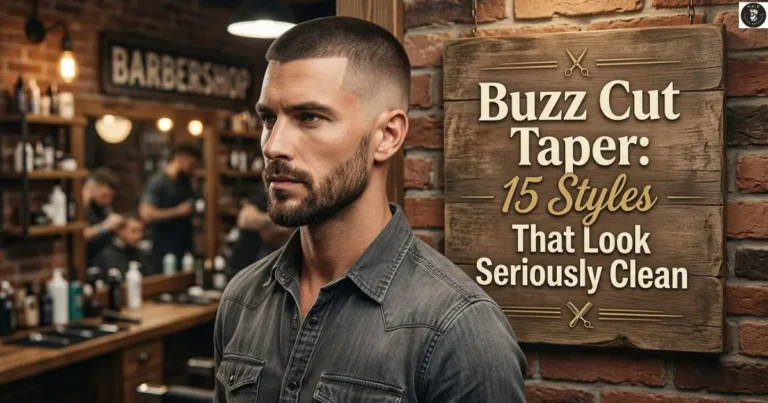
Also Read: Buzz Cut Taper: 15 Styles That Look Seriously Clean
Buzz Cut Basics: Understanding Guard Numbers and Length
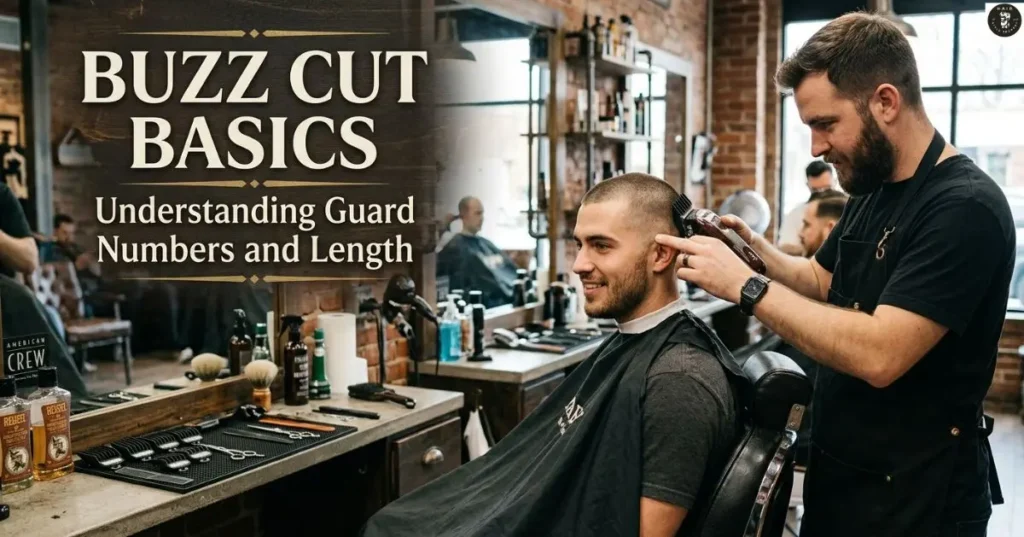
A buzz cut, at its core, is any clipper cut hairstyle that leaves hair uniformly short across the scalp, typically achieved using electric clippers fitted with a plastic attachment called a guard.
Clipper guards are numbered, and that guard number system is the backbone of how barbers and home groomers alike communicate desired length.
A guard length comparison is worth understanding before you commit to any length: a #1 guard leaves hair at roughly one-eighth of an inch, while a #2 leaves about a quarter inch, and the numbers climb from there, each step adding roughly an eighth of an inch.
Lower numbers mean more scalp visibility and a closer, more uniform hair length; higher numbers leave more length and a softer look overall.
Understanding this system matters even if you’re planning to grow your hair out, because the guard length you’re currently wearing determines your starting point and, to some extent, how long the early growth stages will feel.
Someone coming from a #1 induction cut is going to spend more weeks in the “fuzzy” phase than someone who was already at a #4 or #5 before deciding to grow things out.
Also Read: 41 Mid Fade Buzz Cut Styles That Look Sharp in 2026
Buzz Cut Variations Worth Knowing Before You Start
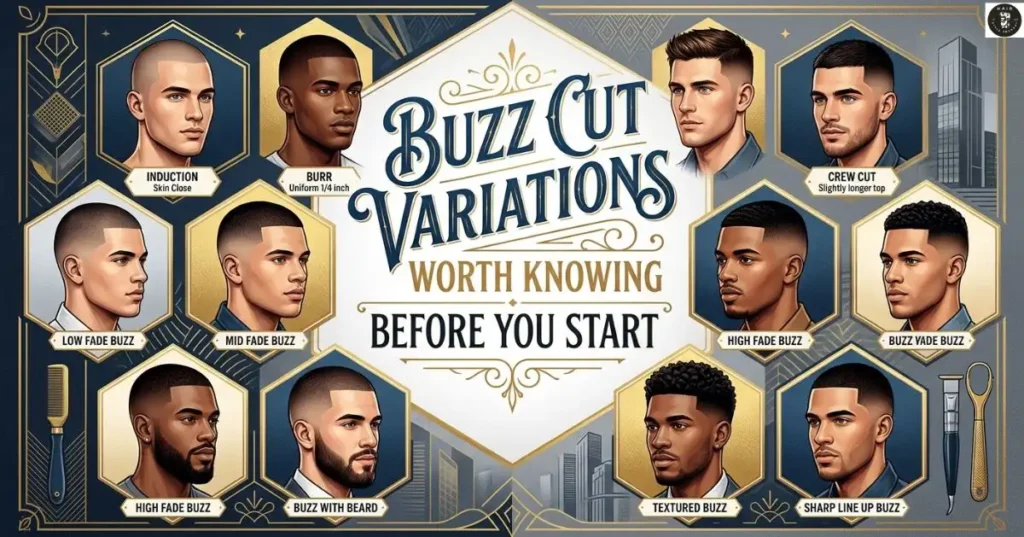
Not all buzz cuts are created equal, and knowing which variation you’re working from helps set expectations for growth.
An induction cut is the shortest possible buzz cut, often done with clippers and no guard at all, leaving hair almost at scalp level — this is the classic look associated with military haircuts and induction into basic training, hence the name.
A burr cut is nearly identical, typically using a very low guard number for a slightly softer finish than a true induction cut.
A butch cut sits a bit longer, usually with the top slightly longer than the sides for a touch of texture on top, while a brush cut takes that idea further, leaving enough length on top for the hair to stand up slightly, almost bristle-like. 👉 Read More: Buzz Cut Blond
Military grooming standards have popularized several of these cuts specifically because they’re a genuinely low-maintenance haircut — in fact, for many people they function as close to a zero maintenance hairstyle as hair can get, requiring no daily styling and only occasional touch-ups.
That’s part of why so many people gravitate toward a buzz cut in the first place, and it’s worth acknowledging honestly: growing out of one means giving up that convenience, at least temporarily, in exchange for more styling options later.
Buzz Cut Long Hair by Face Shape
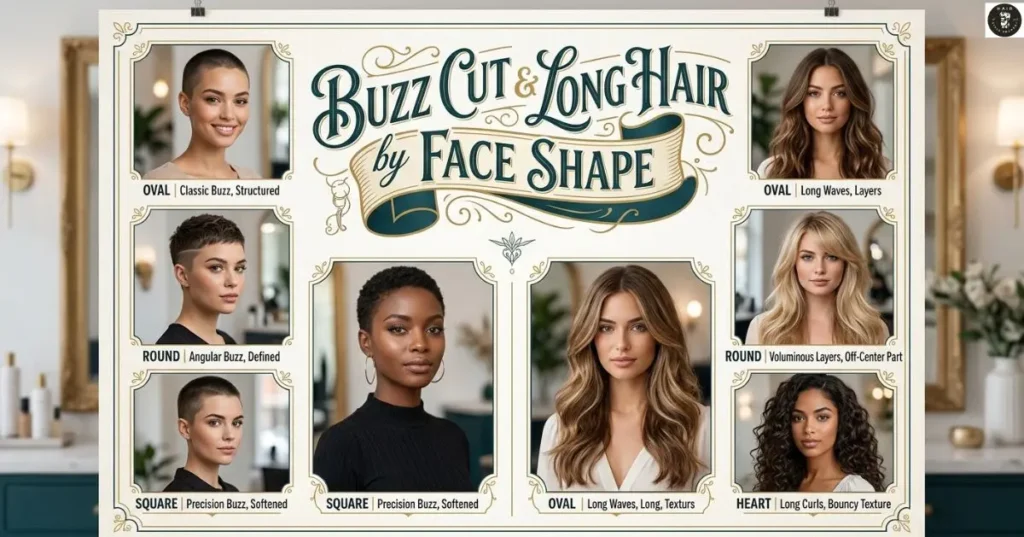
One of the most common questions people ask before starting a buzz cut long hair transition is whether their face shape will “work” with longer hair the way it worked with a close crop.
The honest answer is that a face shape guide is more useful for choosing a flattering style than it is for predicting whether growing out will look good — because nearly every face shape can be flattered by the right longer cut, it just takes a slightly different approach.
An oval face shape is often considered the most versatile, since it can generally carry both short and long styles without much trouble. A round face shape tends to benefit from added height on top and shorter sides once hair grows out, since that combination elongates the face visually.
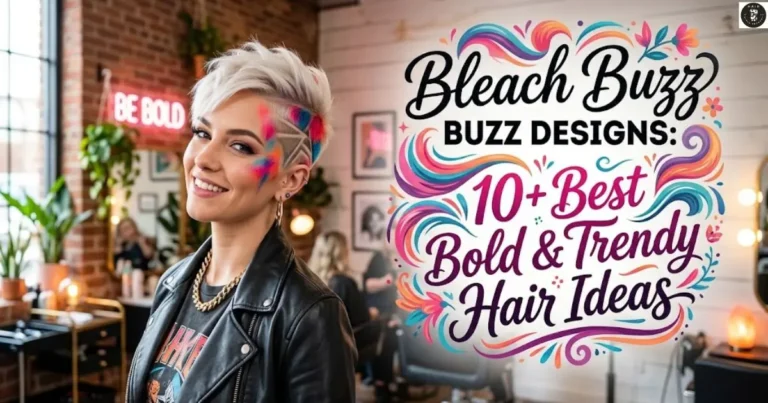
A square face shape, with its strong jawline, often pairs well with textured, slightly longer styles that soften the angles rather than emphasizing them further. An oblong face shape usually benefits from horizontal volume rather than height, so a fuller, shorter-on-top transition style can help balance the proportions. 👉 Read More: Bleach Buzz Designs
A heart-shaped face, wider at the forehead and narrower at the chin, often looks great with hair that adds some width lower down, while a diamond face shape — wide cheekbones, narrower forehead and jaw — tends to suit textured, side-swept styles once there’s enough length to work with.
Head shape plays a role here too, since someone with a more angular head shape might feel self-conscious mid-buzz-cut-long-hair transition specifically because a very short cut left little room to disguise it, something that becomes far less of a concern once there’s enough length to add shape and texture.
Buzz Cut Long Hair and Your Natural Hair Texture
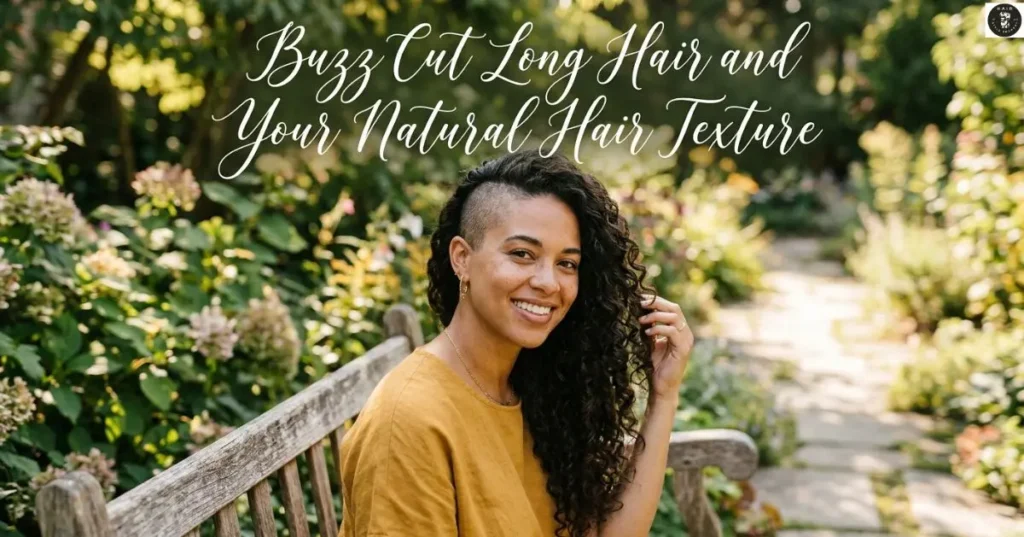
Hair texture has an enormous impact on how the buzz cut long hair process actually looks and feels day to day, and it’s one of the most underestimated variables in the entire transition.
Straight hair tends to grow out fairly predictably, lying flat against the head for longer before it has enough length to hold any real shape or volume. Wavy hair often starts showing its natural movement earlier, sometimes within the first month or two, which can actually make the in-between stages look more intentional.
Curly hair and coily hair behave differently again — because curl pattern causes hair to appear shorter than its actual measured length, someone with tightly coiled or kinky hair may find that what would be a fairly short length on straight hair looks like a fuller, more voluminous style much sooner in the growth process. 👉 Read More: Mullet Buzz
Hair thickness matters just as much as curl pattern. Thick hair tends to look fuller at every stage of growth and can carry an “in-between” length with more visual weight, while thin hair or fine hair can look sparse at the same length, making mid-transition stages feel more exposed.
This is also where it’s worth being honest about hair loss: a receding hairline or generally thinning hair changes the calculus considerably, since a longer style can sometimes draw more attention to areas of reduced density than a close buzz cut ever did.
If that’s a concern, it’s worth having a frank conversation with a barber about which transition lengths and styles will work with your particular pattern of density rather than against it.
👉 Read More: Long Buzz Cut Fade
The Buzz Cut Long Hair Growth Timeline
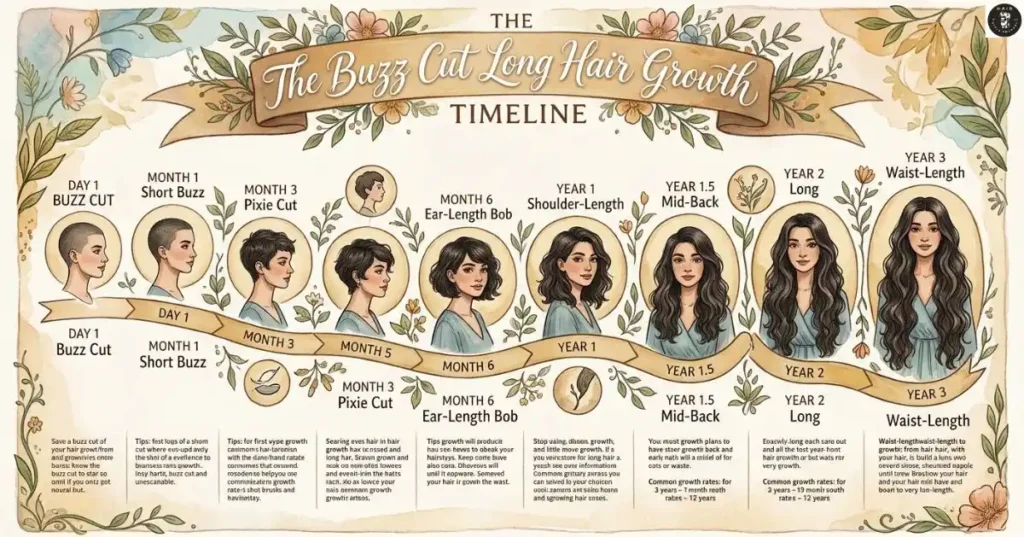
Hair, on average, grows about half an inch per month, though this varies by individual, hair type, and even season.
Understanding the general hair growth stages ahead of time makes the buzz cut long hair journey far less frustrating, because you know roughly what to expect and when.
In the first two to four weeks, you’re mostly just moving past the closest, most uniform hair length — this stage often still looks like a slightly grown-out buzz cut and requires very little styling.
By months two and three, most textures have enough length to start showing some natural movement, and this is typically when people start experimenting with basic styling products for the first time in months.
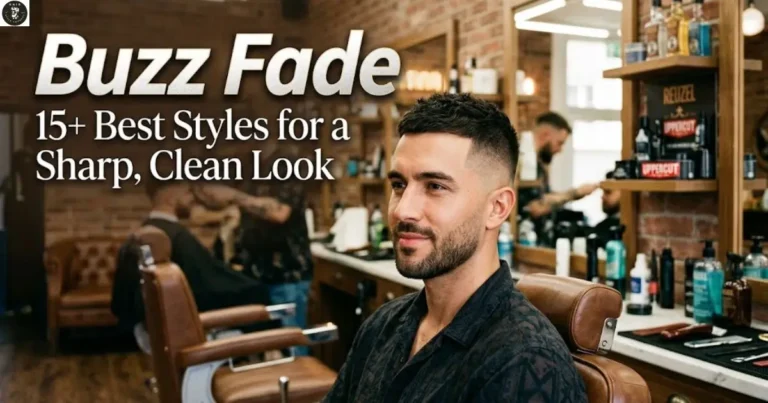
By month four or five, hair usually has enough length on top to be pushed into a rough shape with product, even if the sides still look shorter and less developed by comparison. 👉 Read More: Buzz Fade
Past the six-month mark, most people have enough uniform length to be considered fully through the transition, though true “long hair” by most definitions is still further out depending on your goals.
Knowing these hair growth phases in advance helps with patience, which is honestly the biggest factor in whether someone successfully completes a buzz cut long hair transition or gives up and reaches for the clippers around week six out of sheer discomfort with how things look.
Buzz Cut Long Hair: The Shelf Cut and Awkward Stage
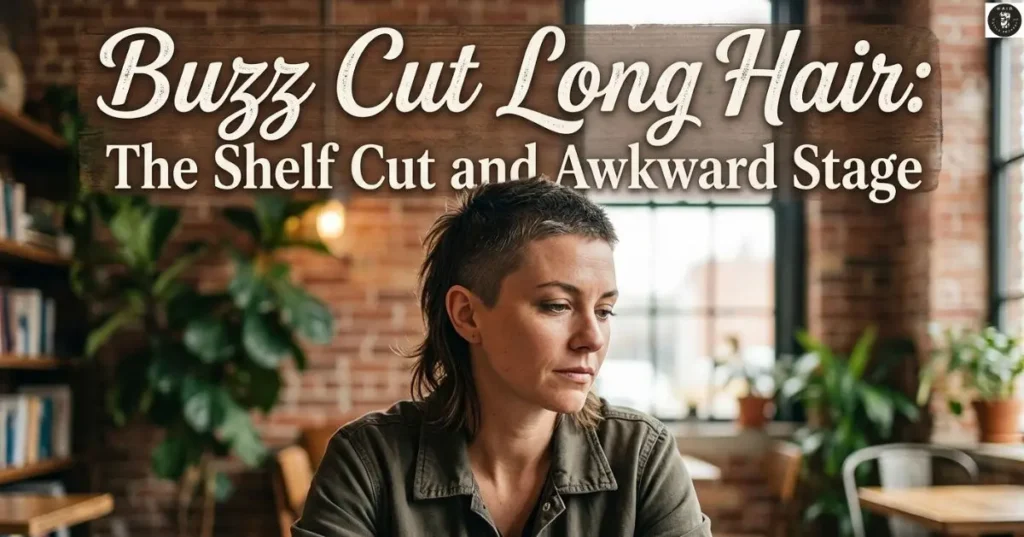
Somewhere in the middle of the process, most people encounter what’s commonly nicknamed the “shelf cut” — the stage where the top of the hair has grown out noticeably more than the sides, creating a visible ledge or shelf where the two lengths meet.
This is, without question, the most commonly cited frustration point in any buzz cut long hair transition, and it’s worth normalizing rather than panicking about.
The shelf effect happens because barbers typically taper sides shorter than the top even during a short cut, so when growth resumes, the top simply has a length head start.
The good news is that tapering sides regularly during the transition — rather than letting everything grow untouched — can minimize how dramatic this shelf looks. 👉 Read More: Buzz Cut Skin Fade
Asking a barber specifically to blend the sides down while leaving the top length untouched is one of the most effective ways to get through this stage without feeling like you need to hide under a hat for six weeks straight.
Buzz Cut Long Hair: Best Transition Hairstyles
A good transition hairstyle is really about buying yourself styling options at each stage rather than waiting passively for hair to “finish” growing.
A faded buzz cut — where the sides are kept tight and faded while the top is allowed to grow — is one of the most popular ways to manage the buzz cut long hair process, since it keeps things looking deliberate at almost every point along the way rather than simply looking like an unkempt short cut.
Other people opt for a slightly longer, all-over uniform hair length during the transition, avoiding tapering altogether so growth stays even, accepting a slightly shaggier look in exchange for a smoother eventual transition into fully long hair. 👉 Read More: Buzz Cut Taper Fade
There’s no universally “correct” approach here — it comes down to personal tolerance for the in-between stages, how much upkeep you’re willing to do at the barbershop in the meantime, and what your eventual target style actually looks like.
Styling Products for Buzz Cut Long Hair at Every Stage
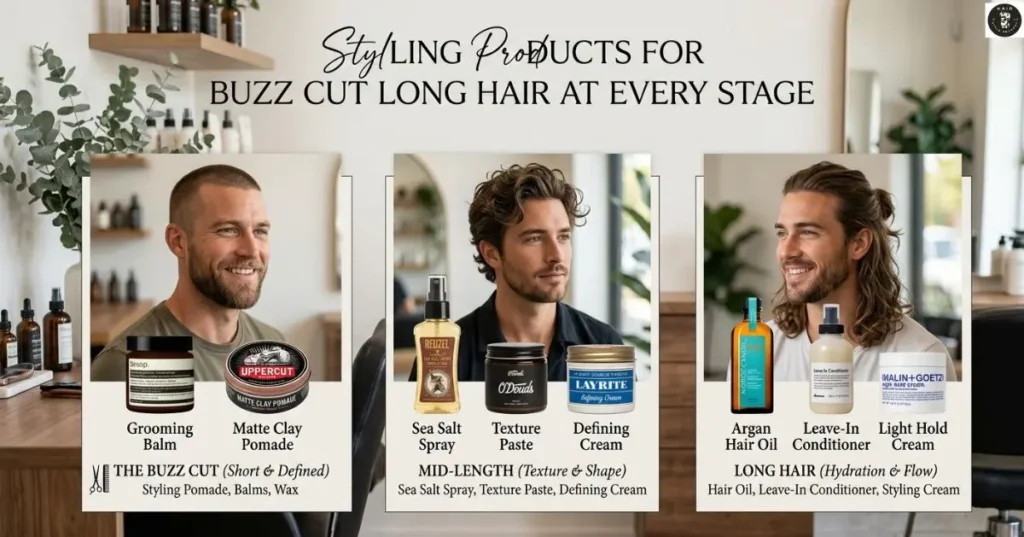
Once there’s enough length to style at all, product becomes a meaningful part of the buzz cut long hair routine. In the earliest stages, a lightweight styling cream can add just enough hold and texture to make very short hair look intentional rather than simply “growing.”
As length increases, matte clay tends to become more useful, offering stronger hold with a natural, non-shiny finish that works well for textured, slightly tousled looks common in the middle stages of growth.
For people with straighter hair looking to add texture and movement, a salt spray can help introduce some natural-looking wave and grit, particularly useful once there’s enough length for hair to actually hold a shape.
As hair gets longer still, many people transition toward shaping cream or pomade, both of which offer more control for defined partings, slicked styles, or classic finished looks. 👉 Read More: Buzz Cut Asian
The right product really depends on your hair texture, your target style, and how much hold versus flexibility you personally prefer — but having at least one reliable product on hand from around month two onward makes a noticeable difference in how put-together the transition looks.
Scalp Care Tips for the Buzz Cut Long Hair Journey
Scalp care tends to get overlooked during a buzz cut long hair transition, but it matters more than most people expect.
When hair is extremely short, the scalp is essentially exposed skin and needs to be treated that way — sun protection for the scalp is genuinely important during this period, since a very short buzz cut offers almost no natural shade, and sunburn on the scalp is both painful and, over time, a real skin health concern.
A scalp moisturizer becomes useful once hair starts providing some coverage again, helping prevent the dryness and flaking that can otherwise show through short hair more visibly than it would through a full head of longer hair.
Periodic exfoliating scalp treatments — even something as simple as a gentle scrub during a shower — can help clear away buildup and support healthier hair growth at the follicle level, which matters more than usual when you’re actively trying to grow hair out rather than just maintain a short length.
Buzz Cut Long Hair Paired with Facial Hair
Facial hair pairing is one of the more fun parts of navigating a buzz cut long hair transition, since beard and mustache styles can help balance the proportions of a head that’s mid-growth.
A well-maintained beard paired with a buzz cut growing out can look deliberately rugged rather than unfinished, and many barbers will recommend keeping facial hair slightly more developed during this stage specifically to draw the eye and soften the transition on top.
Stubble styling is a popular middle ground for people who don’t want a full beard commitment but still want some definition on the jawline while their hair is between lengths.
Goatee styling works particularly well for people with rounder face shapes going through this process, since it can add some visual length to the lower face to balance a fuller head of hair.
On the other end, some people prefer a clean shaven look throughout the entire transition specifically because it keeps at least one part of their grooming routine simple while everything else is in flux — there’s no wrong answer here, just personal preference.
Worth a quick mention too: buzz cut and glasses is a combination plenty of people navigate through this whole process, and generally speaking, frame shape matters far more than hair length in how that pairing looks, so there’s no need to avoid glasses during any stage of growing your hair out.
Maintaining a Buzz Cut Long Hair Look at Home
A lot of people managing a buzz cut long hair transition still need some home clipper maintenance along the way, particularly for keeping sides tapered between barbershop visits or trimming neck and sideburn areas that grow noticeably faster than the rest of the head.
Investing in a decent set of clippers makes a real difference here — Wahl clippers and Andis clippers are both widely used, well-reviewed options that home groomers rely on for everything from quick touch-ups to full at-home cuts, and either brand tends to hold up well with basic care.
Home clipper maintenance itself is fairly simple: clean the blades after each use, oil them periodically according to the manufacturer’s instructions, and replace guards or blades if they start pulling hair instead of cutting cleanly.
None of this needs to be complicated, but skipping it entirely tends to show up as uneven cuts and irritated skin, which is the last thing you want during a stage when you’re already navigating awkward in-between lengths.
Buzz Cut Long Hair: Barbershop vs DIY Maintenance
There’s a real decision point during any buzz cut long hair transition about how much to handle yourself versus how much to leave to a professional.
A barbershop haircut offers precision haircut work that’s genuinely hard to replicate at home — clean edge work, a sharp lineup haircut along the hairline, and the kind of tapering sides technique that keeps a growing-out style looking sharp rather than shaggy.
Somewhere like a well-regarded neighborhood spot — a Manhattan Barbershop, for instance, or whatever the equivalent trusted shop is in your own area — can be worth the investment specifically during the trickier middle stages of growth, when a small shaping mistake can set your timeline back visually even if the hair itself hasn’t lost any actual length.
That said, DIY haircut work at home has its place too, particularly for simple maintenance tasks between professional visits — cleaning up neck hair, trimming stray pieces, or doing basic upkeep on the sides while leaving the top alone to grow.
Most people find a hybrid approach works best: professional barbershop equipment and expertise for anything involving shaping or precision work, and simple home haircut tools for the small touch-ups in between.
Buzz Cut Long Hair in Hot and Cold Climates
Climate is a genuinely practical consideration during a buzz cut long hair transition, and it’s one that doesn’t get discussed often enough.
A hairstyle for hot climate conditions generally benefits from shorter, more breathable lengths, which is part of why buzz cuts are so popular among people in warmer regions or those with active, outdoor lifestyles in the first place — temperature regulation is a real, practical advantage of very short hair, not just an aesthetic choice.
Growing hair out in a hot climate means adjusting expectations: longer hair traps more heat and can feel noticeably different day to day, particularly during the middle stages when hair is long enough to feel warm but not yet long enough to easily push back or tie up.
On the flip side, a hairstyle for cold climate conditions can actually benefit from the extra length, since longer hair provides more natural insulation and warmth than a close buzz cut does.
If you’re going through this transition seasonally, it’s worth timing your commitment loosely around climate where possible — starting a grow-out heading into cooler months, for instance, can make the process more comfortable than starting right before peak summer heat.
Buzz Cut Long Hair and Confidence: The Mental Side of Growing Out
It’s worth being honest that the hardest part of a buzz cut long hair transition often isn’t practical at all — it’s psychological.
Confidence and hairstyle are deeply connected for a lot of people, and a style that’s been a reliable, low-maintenance haircut and part of someone’s identity for years can feel destabilizing to change, even temporarily.
This is especially true for anyone who adopted a buzz cut originally for professional appearance reasons, athletic hairstyle practicality, or because of past military grooming standards — for these people, growing hair out isn’t just a style change, it’s a genuine shift in self-presentation that takes some adjustment.
If you’re feeling uncertain mid-transition, know that it’s an extremely common experience, and that most of the self-consciousness fades once hair passes the awkward middle stages and starts to actually resemble a defined style rather than just “grown-out.”
Leaning on wardrobe coordination with haircut choices — dressing in a way that feels put-together even while your hair is mid-transition — can help bridge that confidence gap in the meantime.
And if the whole process starts to feel isolating, there’s a genuinely large long hair community online and in barbershops alike who’ve been through exactly this transition and are generally happy to offer hair transition support, whether that’s styling tips, encouragement, or just reassurance that the shelf-cut stage doesn’t last forever.
Buzz Cut Long Hair: Design Work and Personalizing the Transition
Not every stage of a buzz cut long hair transition has to be purely functional. Plenty of people use the shorter early stages as an opportunity for a bit of buzz cut design work — fine line-ups, subtle geometric patterns near the temple, or a crisp part cut directly into short hair with clippers.
This kind of hairstyle personalization can make the earliest weeks of a grow-out feel like an intentional style choice rather than a waiting game, and it’s a popular way to keep things visually interesting before there’s enough length to style with product alone.
As hair grows past the point where clipper-cut designs hold their shape, that same appetite for personalization can shift toward how the hair is parted, brushed, or textured.
Some people ease into a defined side part early, using product to train the hair in that direction well before there’s enough length for it to hold on its own overnight.
Others prefer a more relaxed, undefined texture throughout the transition, letting the hair fall naturally rather than committing to a set part or shape until the very end of the process.
Either approach is valid — the point is that a buzz cut long hair transition doesn’t have to feel like six passive months of simply waiting for hair to appear. There’s room to make style choices at every single stage.
Men’s Grooming Trends and the Return of Longer Styles
It’s worth noting that the broader context around men’s grooming has shifted over the past several years, and that shift is part of why so many people are choosing to grow out a buzz cut in the first place.
Men’s hairstyle trends have moved in cycles for decades, alternating between eras where close-cropped, low-maintenance cuts dominate and eras where fuller, longer, more textured styles come back into fashion.
A lot of people who adopted a buzz cut during one of the shorter-hair cycles — whether for convenience.
A job that demanded a particular professional appearance haircut, or simply because it was the dominant look at the time — are now finding themselves drawn to the longer styles currently trending, and a buzz cut long hair transition is simply the practical first step in getting there.
This cultural shift also means there’s more mainstream barbershop familiarity with managing this exact transition than there might have been a decade ago.
Where once a barber might have simply kept trimming a client back down to a uniform short length out of habit, most barbershops today are well-practiced in the tapering, shaping, and styling techniques needed to guide a client through a multi-month grow-out without it looking like an accident along the way.
If you mention to your barber that you’re growing out a buzz cut, most will already have a plan for how to handle the next several visits, adjusting their approach as your length increases.
Hair Growth Tips to Support a Faster, Healthier Transition
While hair growth rate is largely determined by genetics, there are still meaningful hair growth tips that can support a smoother buzz cut long hair journey.
A balanced diet with adequate protein plays a real role in healthy hair growth, since hair itself is primarily made of protein, and deficiencies can show up as slower growth or weaker strands over time.
Staying hydrated supports scalp health generally, which in turn supports the follicles responsible for producing new hair.
Reducing unnecessary heat styling during the transition — even though there often isn’t enough length yet to use heat tools extensively — can help protect the hair that is growing, preventing breakage before it has a chance to add length.
Gentle handling matters too: aggressive towel-drying or rough brushing on shorter, more fragile new growth can cause more breakage than people realize, particularly for finer or more fragile hair types.
None of these tips will dramatically accelerate the underlying growth rate, but together they help ensure that the hair growing out during your buzz cut long hair transition is as healthy and full as it can be, which matters a lot for how good the end result looks.
Encouragement for Anyone Mid-Transition
If you’re currently somewhere in the middle of a buzz cut long hair transition and feeling like it’s taking forever, that feeling is almost universal — nearly everyone who has grown out a short cut remembers a specific stretch where they seriously considered giving up and heading straight back to the clippers.
The stretch between roughly six and twelve weeks tends to be the hardest, since there’s just enough length to look untidy but not quite enough to style into anything defined yet.
Pushing through that stretch is largely a matter of small wins: a good trim that cleans up the shelf effect, a new product that finally gives the top some shape, or simply reminding yourself of the style you’re working toward.
Plenty of people find it helpful to keep a rough photo timeline of their own progress, since it’s often easier to notice change in a month-old photo than it is in the mirror day to day, where the gradual growth can be hard to perceive.
Whatever gets you through it, know that this stage passes for everyone who sticks with it, and the payoff — a fuller, more versatile style with far more options than a buzz cut ever offered — is generally considered well worth the few uncomfortable months it takes to get there.
Buzz Cut Long Hair: Setting Realistic Expectations for Commitment
Before committing fully to a buzz cut long hair transition, it helps to be honest with yourself about the level of hairstyle commitment involved.
Unlike a haircut you can simply repeat every few weeks, growing hair out is a slower, less controllable process — you can guide it with tapering, products, and trims, but you can’t speed past the stages that feel awkward. Setting a rough personal timeline, even a loose one, can help.
Deciding in advance that you’re committing to at least three or four months before making any final judgment gives the process room to actually unfold, rather than reacting to every uncomfortable week as if it’s the permanent outcome.
It’s also worth thinking honestly about your daily routine and how much extra time you’re willing to put into styling once there’s enough length to work with.
A buzz cut long hair transition inevitably means trading some of the low maintenance lifestyle that made a buzz cut appealing in the first place for a routine that involves more product, more frequent barbershop visits for shaping, and more active styling each morning.
That trade-off is worth it for plenty of people, but going in with clear eyes about what you’re signing up for — rather than being surprised by it three months in — makes the whole process considerably easier to stick with.
Finally, remember that a buzz cut long hair transition doesn’t have to be all-or-nothing.
Plenty of people grow out partway, land on a length they genuinely like — often somewhere in the medium-length range that still requires relatively minimal upkeep — and simply maintain that rather than pushing all the way toward a fully long style. There’s no rule that says you have to reach any particular endpoint.
The goal is finding a length and style that actually works for your lifestyle, your hair type, and how much daily effort you’re realistically willing to put in, even if that turns out to be somewhere well short of what you originally pictured when you first put the clippers down.
My Final Thoughts:
Growing out a buzz cut is as much a test of patience as it is a grooming decision, but it’s one that almost anyone can navigate successfully with the right expectations and a little planning.
Understanding your starting guard length, working with — rather than against — your natural hair texture and face shape, staying ahead of the shelf-cut stage with regular tapering, and building a simple scalp and styling routine along the way all add up to a far smoother transition than simply letting things grow unchecked.
Whether you’re chasing a specific longer style, testing out a change from a lifetime of low-maintenance cuts or just curious what your hair looks like past a quarter inch, the buzz cut long hair journey is temporary, well-trodden territory — and for most people, entirely worth seeing through to the other side.
FAQs
How long does it take to grow out a buzz cut?
Most people need somewhere between four and six months to move past the most awkward stages of a buzz cut long hair transition, though reaching what most would call “long hair” typically takes closer to a year or more, depending on your hair growth rate and target length.
What’s the hardest part of growing out a buzz cut?
For most people, it’s the shelf cut stage, where the top has grown out noticeably more than the sides. Regular trims that taper the sides while leaving the top alone can make this stage far less noticeable.
Do I need special products to grow out a buzz cut?
Not immediately, but as length increases, a light styling cream, matte clay, or shaping cream can help keep the in-between stages looking intentional rather than simply unkempt.
Can I still get regular trims while growing out my hair?
Yes, and it’s generally recommended. Trimming the sides and neckline while leaving the top to grow is one of the most effective ways to manage a buzz cut long hair transition without letting it look messy.
Will my hair texture change as it grows out from a buzz cut?
Not technically, but how your natural texture appears can change significantly with length. Wavy, curly, coily, and kinky hair types in particular often show noticeably more movement and volume once there’s enough length for the natural pattern to express itself.

I’m M Ahmad Ansari, founder and content creator at HairstyleJournal. With 3+ years of experience researching hairstyles, haircuts, and men’s grooming, I create practical, easy-to-understand content to help readers choose, style, and maintain the right haircut with confidence.
6 Comments